
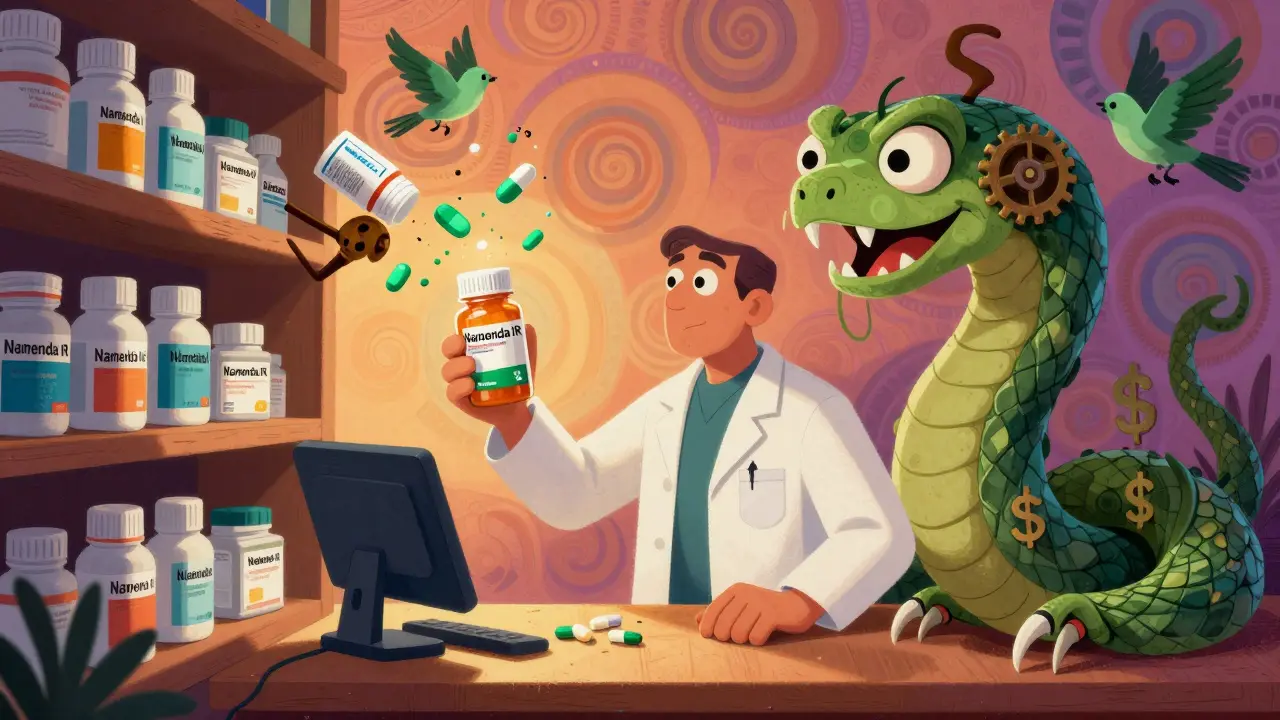
When you fill a prescription for a brand-name drug, you might expect to get a cheaper generic version instead-especially if your state allows automatic substitution. But in many cases, that choice is taken away before you even get to the pharmacy. This isn’t an accident. It’s a deliberate strategy used by some drug manufacturers to delay competition and keep prices high. These tactics are now under serious legal scrutiny, and the consequences are costing patients billions.
How Generic Substitution Is Supposed to Work
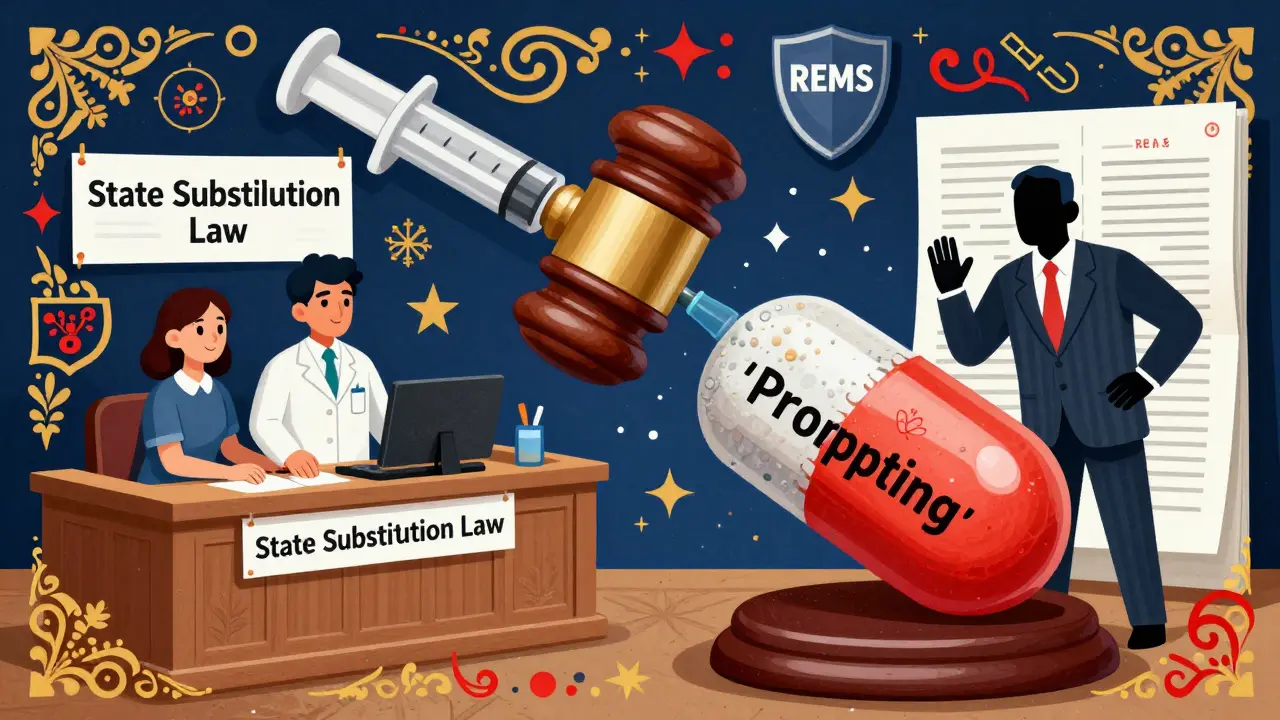
State laws in the U.S. let pharmacists swap a brand-name drug for a generic version without needing to contact the doctor-so long as the generic is bioequivalent. That means it works the same way, has the same active ingredient, and meets the same safety standards. These laws exist to save money. When a patent expires, generics usually capture 80-90% of the market within months. But that only happens if the original drug is still available.
Here’s where things go off track. Instead of letting the market shift naturally, some companies introduce a slightly modified version of their drug-like a new pill shape, extended-release formula, or different delivery system-and then pull the original off the market. This is called product hopping or hard switching. It doesn’t improve treatment. It just blocks pharmacists from substituting generics.
The Namenda Case: A Turning Point
The most famous example is Actavis’s switch from Namenda IR (immediate release) to Namenda XR (extended release). The original Namenda IR was a tablet taken twice daily. The new version, Namenda XR, was a capsule taken once a day. The therapeutic difference? Minimal. But Actavis withdrew Namenda IR just 30 days before generic versions were set to hit the market.
Why does that matter? Because once a patient is switched to the new formulation, they rarely go back. Doctors don’t want to rewrite prescriptions. Patients don’t want to switch back to a twice-daily pill. And pharmacists can’t substitute a generic for a drug that’s no longer available. The Second Circuit Court of Appeals ruled in 2016 that this was illegal. The court said Actavis wasn’t just launching a new product-it was using the withdrawal of the old one to sabotage the entire generic substitution system.
This was a landmark decision. For the first time, a court recognized that state substitution laws aren’t just paperwork-they’re a key part of how competition works in pharma. If you remove the original drug before generics can enter, you’re not innovating. You’re monopolizing.
Other Tactics: REMS Abuse and Patient Coercion
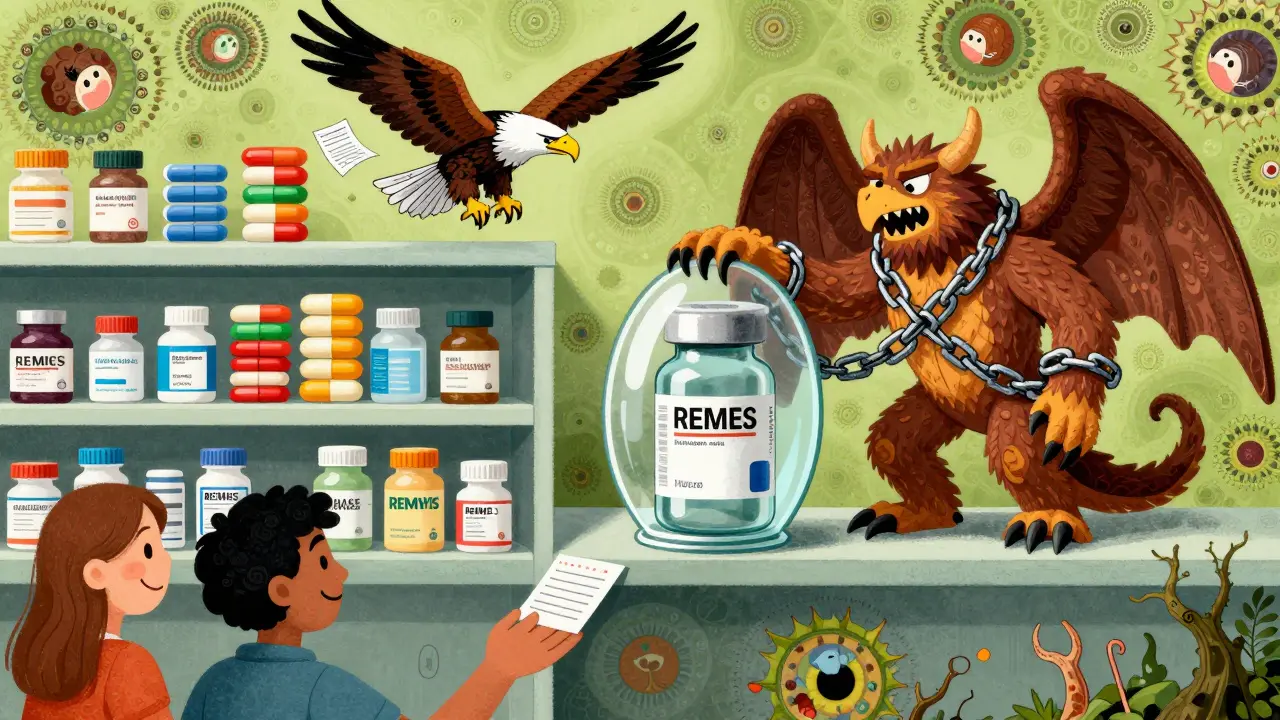
Product hopping isn’t the only trick. Another common tactic involves Risk Evaluation and Mitigation Strategies (REMS). These are FDA-mandated safety programs meant to control dangerous drugs. But some companies use them to block generic manufacturers from getting the samples they need to prove their drugs are bioequivalent.
According to a 2017 analysis by Professor Michael A. Carrier, over 100 generic companies reported being denied access to samples. One study found that for 40 drugs subject to these restrictions, the cost of delayed generic entry exceeded $5 billion per year. Without samples, generics can’t get approved. No approval means no competition. No competition means prices stay sky-high.
Then there’s Suboxone. Reckitt Benckiser switched from Suboxone tablets to a film that dissolves under the tongue. They claimed the film was safer because it reduced overdose risk. But they also spread fear-telling doctors and patients that the tablets were unsafe. The FTC found this was a coercive tactic. Patients didn’t choose the film-they were pressured into it. The FTC settled with Reckitt in 2019 and 2020, forcing them to stop the misleading claims.
Why Some Courts Still Let It Slide
Not every case ends this way. In 2009, a court dismissed a lawsuit against AstraZeneca for switching patients from Prilosec to Nexium. Why? Because Prilosec was still on the market. The court saw it as adding a new option, not removing an old one.
That’s the key difference. If the original drug stays available, courts often say it’s procompetitive. But if it’s pulled, and the new version is just a tweak, courts are starting to see it as anticompetitive. The FTC’s 2022 report called out this inconsistency, noting that some judges ignore the role of state substitution laws entirely, treating generic manufacturers as if they should just spend more on advertising instead of being allowed to compete fairly.
The Financial Cost: Billions Lost
The numbers are staggering. According to Drug Patent Watch, Humira, Keytruda, and Revlimid alone cost the U.S. $167 billion more than they would have if generics had entered on time-like they did in Europe. Revlimid’s price jumped from $6,000 to $24,000 per month over 20 years. Ovcon, a birth control pill, saw its generic market shrink from 85% to under 15% after the manufacturer introduced a chewable version and pulled the original. That’s not innovation. That’s price control.
When product hopping works, generic penetration drops from 80-90% to as low as 10-20%. That means patients pay more. Insurance companies pay more. Medicare and Medicaid pay more. And the money doesn’t disappear-it flows into corporate profits.
Enforcement Is Tightening
The FTC has been pushing back. After the Namenda ruling, they got a court order forcing Actavis to keep selling the old version for 30 days after generics launched. That gave pharmacists time to switch prescriptions. In the Suboxone case, they forced settlements worth millions. The Department of Justice has also gone after generic manufacturers-for fixing prices. Teva paid $225 million in 2023, the largest criminal antitrust penalty ever for a domestic drug cartel.
State attorneys general have joined too. New York’s AG won an injunction against Actavis in 2014. Other states are now reviewing their own substitution laws to close loopholes. The FTC is also lobbying legislatures to strengthen rules so that manufacturers can’t legally withdraw a drug just to block generics.
Who’s Fighting Back?
The pharmaceutical industry argues this is about innovation. PhRMA claims companies have no duty to help generics by keeping old drugs on the market. They say patients benefit from new formulations-even if they’re minor.
But regulators and courts are seeing through it. The FTC’s 2022 report concluded that most product hopping strategies “lack procompetitive justification.” Judge Robert S. Litt told Congress in 2023 that the financial impact on patients and payers is “staggering.” The real question isn’t whether companies can improve drugs. It’s whether they can use the system to avoid competition.
What’s Next?
More lawsuits are coming. The FTC and DOJ held joint hearings in 2023 focused on generic and biosimilar competition. Congress is considering legislation to limit REMS abuse and require manufacturers to supply samples to generics. Some states are moving to ban hard switching outright.
For patients, the fight is about choice. For pharmacists, it’s about following the law. For the system, it’s about fairness. If you can’t substitute a generic because the brand-name drug was pulled before it had a chance, then the whole system is broken. And it’s not just about one drug-it’s about every drug that’s next.
Can pharmacists substitute a generic if the brand-name drug is no longer available?
No. State substitution laws only apply when the original brand-name drug is still on the market. If the manufacturer withdraws it before generics launch, pharmacists can’t substitute-even if the generic is approved and cheaper. This is why product hopping works: it removes the legal basis for substitution.
Is product hopping illegal?
It depends. If the original drug is withdrawn and the new version offers no real therapeutic benefit, courts have ruled it’s anticompetitive-like in the Namenda case. But if the original drug stays available, courts often allow it, as in the Nexium case. The legal line is whether the company is adding a product or eliminating competition.
How do REMS programs block generic drugs?
REMS are meant to manage drug risks, but some brand-name companies use them to deny generic manufacturers access to the samples needed for bioequivalence testing. Without samples, generics can’t get FDA approval. This delays competition for years and can cost over $5 billion annually in lost savings.
Why don’t generic companies just market their drugs harder?
Because the system isn’t designed for that. Generic drugs compete on price, not advertising. When a brand-name drug is withdrawn, doctors stop prescribing it. Patients don’t ask for generics-they follow their doctor’s orders. Without the original drug on the shelf, pharmacists can’t substitute, and no amount of marketing fixes that.
What’s being done to stop these practices?
The FTC has sued companies like Actavis and Reckitt, won court orders, and pushed for legislative changes. The DOJ has criminally prosecuted price-fixing cartels. States are strengthening substitution laws. And Congress is considering bills to limit REMS abuse and require sample access for generics. Enforcement is increasing-but it’s still uneven.


