
Stopping steroids like prednisone suddenly can be dangerous-even life-threatening. If you’ve been on them for more than a few weeks, your body stops making its own cortisol. When you cut the medication too fast, your adrenal glands can’t catch up. That’s when you risk adrenal crisis, severe fatigue, joint pain, or worse: your autoimmune disease flares back harder than before. Steroid tapering isn’t just a suggestion-it’s a medical necessity. And doing it right means more than following a chart. It means listening to your body, knowing the warning signs, and working with your doctor to find the slowest safe path off steroids without triggering a relapse.
Why Abrupt Stopping Is a Risk
Your body naturally produces cortisol, a hormone that helps manage stress, blood pressure, and inflammation. When you take prednisone or another glucocorticoid for more than three to four weeks, your brain thinks, "We don’t need to make our own anymore." It shuts down the signal to your adrenal glands. That’s fine as long as you’re still taking the drug. But when you stop suddenly, your body is left with zero cortisol. No backup. No safety net. This isn’t theoretical. The British Journal of Clinical Pharmacology (2021) documented cases where patients ended up in the ER with low blood pressure, vomiting, confusion, and even shock after stopping steroids too fast. One patient, a 58-year-old with rheumatoid arthritis, dropped from 20 mg to 0 mg in three days. Within 48 hours, he collapsed at home. He needed IV hydrocortisone and a week in hospital. His disease didn’t just return-it exploded. And it’s not just about adrenal failure. Your immune system, which steroids have been suppressing, wakes up with a vengeance. For people with lupus, Crohn’s, or vasculitis, a sudden stop can trigger a flare that requires higher doses than before. That’s called disease rebound. It’s not a coincidence-it’s a direct result of skipping the taper.How Tapering Works: The Three-Phase Approach
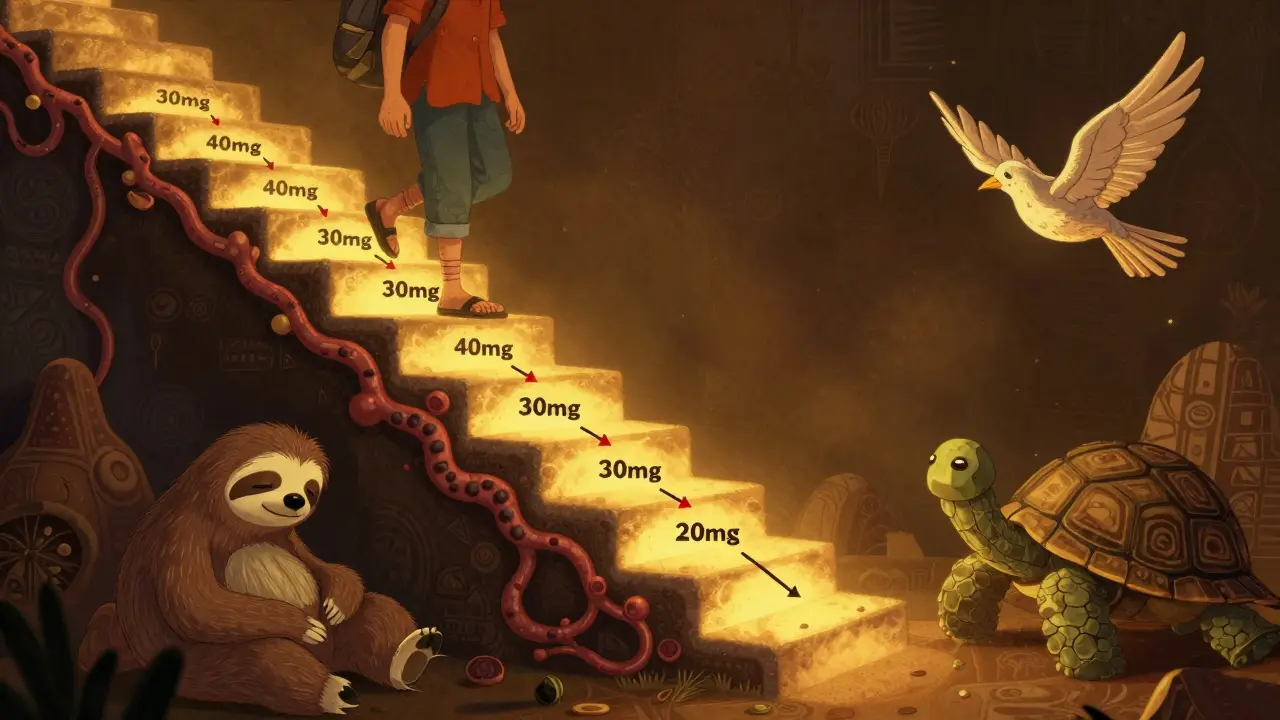
There’s no one-size-fits-all taper. But most doctors follow a proven three-phase structure based on your starting dose and how long you’ve been on steroids. Phase 1: Rapid Taper (Above 20 mg/day)If you’re on 40 mg or more of prednisone, you can usually drop by 5-10 mg every week. That’s fast, but safe at this level because your body still has some cortisol-producing capacity. For example, going from 40 mg → 30 mg → 20 mg over three weeks is common. This phase ends when you hit 20 mg/day. Phase 2: Gradual Taper (20 mg down to 10 mg)
This is where things get trickier. Below 20 mg, your body starts to need more time to restart cortisol production. Drops now happen every two weeks: 20 mg → 15 mg → 10 mg. Some people feel tired, achy, or moody during this phase. That’s glucocorticoid withdrawal syndrome (GWS). It’s not addiction-it’s your body adjusting. Don’t panic. But don’t push through pain either. If symptoms hit hard, hold your dose for an extra week. Phase 3: Slow Taper (10 mg down to 0)
This is the longest and most delicate part. From 10 mg, drop by 2.5 mg every two weeks until you hit 5 mg. Then drop to 2.5 mg over another two to four weeks. Finally, stop. This phase can take 3-6 months, especially if you’ve been on steroids for over six months. Many patients feel fine at 5 mg-then crash at 2.5 mg. That’s normal. It’s not a sign you’re failing. It’s your HPA axis (the brain-adrenal communication line) struggling to wake up.
What to Watch For: Withdrawal Symptoms
Withdrawal isn’t just feeling tired. It’s your body screaming for help. Common signs include:- Fatigue that doesn’t improve with sleep (42% of patients report this)
- Joint or muscle pain, especially in hips, knees, and shoulders (37%)
- Nausea, dizziness, or low blood pressure
- Insomnia or strange sleep patterns
- Anxiety, irritability, or brain fog

When to Consider Switching to Hydrocortisone
Some doctors recommend switching from prednisone to hydrocortisone before the final stages. Why? Hydrocortisone is closer to natural cortisol, with a shorter half-life. The theory is that it lets your adrenal glands restart more smoothly. But here’s the catch: most studies show it doesn’t make a big difference. The Australian Prescriber (2022) says there’s little solid evidence that switching helps. A 2021 study found most patients tapered successfully off prednisone alone. So unless you’re having persistent withdrawal symptoms despite a slow taper, switching isn’t necessary. It adds complexity without proven benefit for most people.What You Can Do to Make Tapering Easier
Tapering isn’t just about pills. Your lifestyle plays a huge role.- Movement matters: Gentle walks-10 to 15 minutes, twice a day-reduce joint stiffness by 57% compared to staying in bed. Swimming or warm-water pool exercises help too.
- Stress control: Daily 10-minute meditation cuts anxiety symptoms by 43%, according to a 2022 analysis of 250 patients.
- Sleep hygiene: Stick to a bedtime. Avoid screens an hour before bed. Poor sleep worsens fatigue and pain.
- Hydration and salt: Low cortisol can cause low blood pressure. Drinking more water and adding a pinch of salt to meals can help.
Never Skip the "Sick Day Rules"
This is one of the most overlooked parts of steroid tapering. Even after you’ve stopped, your adrenal glands might still be asleep. If you get sick-flu, infection, surgery, even a bad toothache-your body needs cortisol to handle the stress. But if it can’t make enough, you’re at risk for adrenal crisis. The Australian Prescriber (2022) says 18% of ER visits by recently tapered patients happen because they didn’t increase their steroid dose during illness. The rule is simple:- If you’re still on any steroid dose (even 2.5 mg), double your dose during illness.
- If you’ve stopped completely but were on steroids for over a year, take 20-30 mg of prednisone for 2-3 days during illness.
- Call your doctor before doing this if you’re unsure.

When Tapering Gets Complicated
Some patients need more help. If you have a complex autoimmune disease like vasculitis or lupus, or you’ve been on steroids for over a year, your doctor might use:- Disease activity scores: For rheumatoid arthritis, doctors use DAS28 to measure joint swelling and pain. If scores stay low, they can taper faster.
- Biomarkers: CRP and ESR levels show inflammation. If they’re normal, tapering may be safer.
- CRH stimulation test: A new test that measures how well your adrenal glands respond. It’s not routine, but it’s 89% accurate at predicting if you can stop safely.
What Not to Do
- Don’t cut your dose in half. That’s how adrenal crisis starts.
- Don’t skip doses. Even one missed day during tapering can throw off your body’s rhythm.
- Don’t rely on online forums. Reddit stories aren’t medical advice. What worked for someone else might kill you.
- Don’t ignore symptoms. Fatigue isn’t "just stress." Pain isn’t "getting older."
- Don’t stop without a plan. Always get written instructions. 41% of withdrawal complications come from confusion over dosing.
Final Thoughts: Patience Is the Real Medicine
Steroid tapering isn’t a race. It’s a slow dance with your body. Rush it, and you pay the price. Go too slow, and you might stay on steroids longer than needed. The goal isn’t to get off as fast as possible. It’s to get off safely-with your health intact. The endocrine society says steroid tapering will remain essential for at least the next two decades. Even with new biologics, steroids are still the fastest, most powerful tool for stopping acute flares. That means more people will need to taper. And more people will need to do it right. If you’re tapering now, keep a journal. Note your dose, your energy, your pain, your sleep. Share it with your doctor every visit. If you feel off, pause. If you feel strong, move forward. And never forget: you’re not weak for needing help. You’re smart for asking for it.How long does steroid tapering usually take?
It depends on how long you’ve been on steroids and your starting dose. For short-term use (under 3 weeks), tapering may take just 1-2 weeks. For long-term use (6+ months), expect 3-6 months or longer. The final phase-going from 10 mg down to 0-often takes the longest because your body needs time to restart cortisol production.
Can I taper off steroids on my own?
No. Tapering should always be supervised by a doctor. Stopping too fast can cause adrenal crisis, a medical emergency. Even if you feel fine, your body may not be ready. Doctors use your medical history, disease type, and lab results to build a safe plan. Never change your dose without their approval.
What are the signs of adrenal insufficiency during tapering?
Signs include extreme fatigue, dizziness or fainting when standing up, nausea, vomiting, low blood pressure, muscle weakness, and confusion. If you have these symptoms, especially after reducing your dose, seek medical help immediately. Adrenal crisis can be fatal if untreated.
Do I need to carry a steroid alert card after stopping?
Yes-if you’ve been on steroids for more than three weeks, you should carry a steroid alert card for at least 12 months, and often up to 18 months. Your adrenal glands may still be slow to respond. In an emergency, paramedics and ER staff need to know you’re at risk for adrenal crisis and may need immediate steroid treatment.
Can I use supplements or herbs to help with tapering?
There’s no proven supplement that helps your adrenal glands recover faster. Some people try licorice root or ashwagandha, but these aren’t backed by strong evidence and can interfere with medications. Focus on proven strategies: gentle movement, sleep, hydration, and stress management. Always talk to your doctor before taking anything new.
Will I gain weight after stopping steroids?
Many people lose weight after stopping steroids because the fluid retention and increased appetite caused by the drug go away. However, if your autoimmune disease flares back, you might gain weight again due to inflammation or if you need to restart steroids. Focus on healthy eating and activity-not just weight loss-to stay balanced.
Is it normal to feel worse before I feel better during tapering?
Yes. Many patients experience a temporary worsening of symptoms-fatigue, pain, mood swings-when reducing doses, especially below 10 mg. This is glucocorticoid withdrawal syndrome, not a disease flare. It usually improves within days to weeks. Holding your dose for an extra week often helps. If symptoms last longer than two weeks or get worse, contact your doctor.
Can I restart steroids if my disease flares after tapering?
Yes, and you should. If your autoimmune disease returns-joint swelling, rashes, fatigue, fever-contact your doctor right away. Restarting steroids is not a failure. It’s a necessary step. The goal is to use the lowest effective dose for the shortest time. Sometimes, that means going back up temporarily before trying to taper again.


