
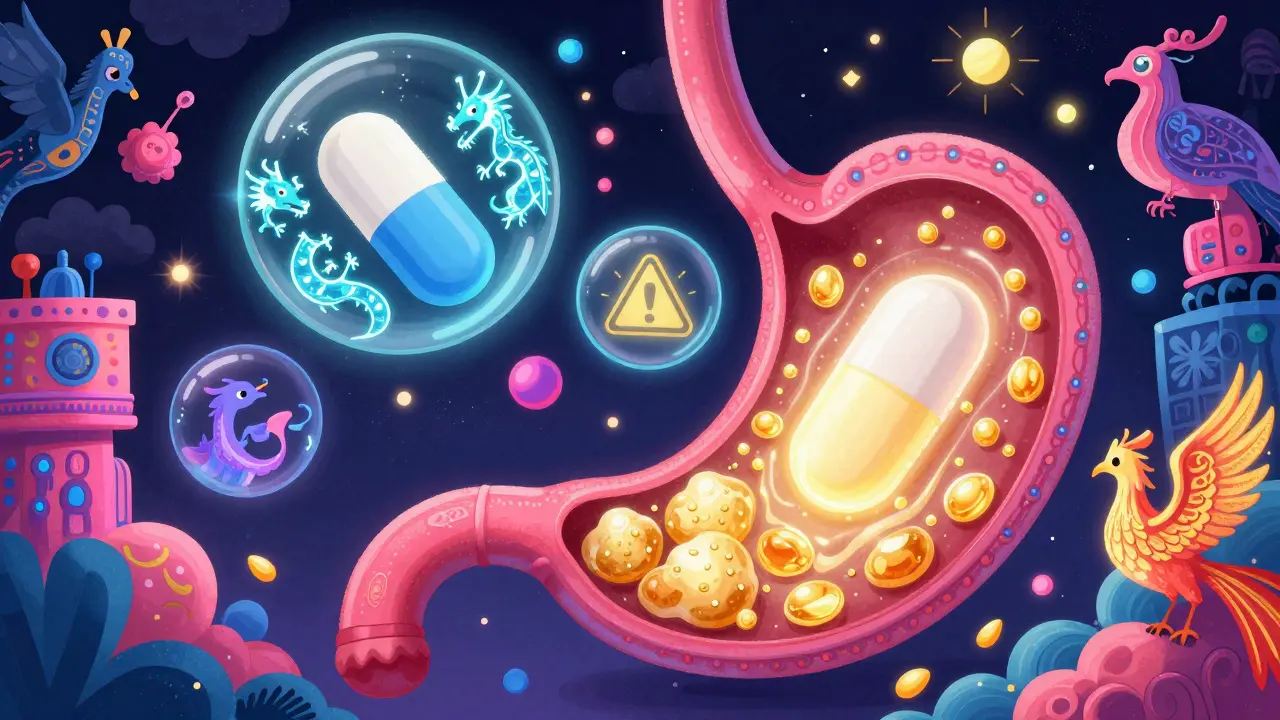
Ever taken a pill and wondered if it really worked because you ate right after? You’re not alone. Many people don’t realize that what’s on their plate can make or break how well their medicine works. Taking medications with food isn’t just a suggestion-it’s a science. And getting it wrong can mean your treatment fails, side effects get worse, or worse, you end up in the hospital.
Why Food Changes How Medicines Work
Food doesn’t just fill your stomach. It changes how your body handles drugs. When you eat, your digestive system kicks into gear. Gastric emptying slows down by 30-50%, meaning pills sit in your stomach longer before moving to the small intestine, where most drugs get absorbed. That delay can push back when the medicine hits your bloodstream. But it’s not just timing. What you eat matters too. High-fat meals (think burgers, fried food, cheese-heavy dishes) can extend gastric emptying by 1.5 to 2 hours. That’s huge for drugs like acetaminophen, which normally peaks in your blood 45 minutes after taking it-on a high-fat meal, that jumps to 90-120 minutes. For some drugs, that delay doesn’t matter. For others, it’s dangerous. Then there’s chemistry. Certain foods bind to drugs and block absorption. Calcium in dairy, iron in spinach, magnesium in nuts-all of these can latch onto antibiotics like tetracycline and doxycycline, cutting their absorption by 50-75%. That means your infection doesn’t clear. You might think you’re taking the right dose, but your body never gets enough. On the flip side, some drugs need fat to work at all. Griseofulvin, an antifungal, absorbs 200-300% better with a high-fat meal. Without it, the drug barely enters your system. It’s not about being hungry or full-it’s about matching the drug’s needs to what’s in your gut.When to Take Medicine: Empty Stomach vs. With Food
There are two main rules: take it on an empty stomach, or take it with food. But what do those phrases actually mean? Empty stomach means one hour before or two hours after eating. This isn’t just “don’t eat right before.” It’s about giving your stomach time to clear out. Levothyroxine, the thyroid hormone replacement, is a classic example. Food can reduce its absorption by 30-55%. That’s enough to leave you tired, cold, and still hypothyroid-even if you’re taking your pill every day. Doctors recommend taking it first thing in the morning with plain water, waiting at least 30 minutes before breakfast. Take with food usually means within 30 minutes of starting your meal. It doesn’t mean a full three-course dinner. For some drugs, like the antibiotic nitrofurantoin, even a light snack boosts absorption by 40%. For others, like the GLP-1 agonist semaglutide, taking it within 30 minutes of eating cuts absorption by 44%. That’s why the instructions matter so much. Some drugs need food not to help absorption, but to protect your stomach. NSAIDs like ibuprofen and naproxen can irritate the stomach lining. Taking them with food reduces the risk of ulcers and acid reflux by up to 70%. One study found stomach pain dropped from 42% to 12% when people took ibuprofen with meals.Medications That Demand Precision
Not all drugs play nice with food. Some are picky-and getting it wrong has real consequences.- Levothyroxine: Must be taken on an empty stomach. Even coffee, soy milk, or calcium supplements can interfere. Patients who take it with breakfast often report persistent fatigue and weight gain-even when labs look okay.
- Tetracycline antibiotics: Avoid dairy, antacids, and iron pills for at least two hours before and after. One Reddit user reported a recurring UTI that only cleared after they stopped taking doxycycline with yogurt.
- Sulfonylureas (glipizide, glyburide): These diabetes drugs trigger insulin release. If taken on an empty stomach, they can crash blood sugar below 70 mg/dL. That’s not just dizziness-it’s confusion, seizures, even coma. Taking them 30 minutes before meals prevents this.
- Itraconazole: This antifungal needs stomach acid to absorb. High-fat meals raise stomach pH, lowering absorption by 40%. Take it with a full meal, but avoid fatty ones. The FDA recommends a cola drink to help acidify the stomach.
- Cefpodoxime: Absorption increases 50-60% with food. Skip the meal, and you might not get enough drug to kill the infection.
Why People Get It Wrong (And What Happens)
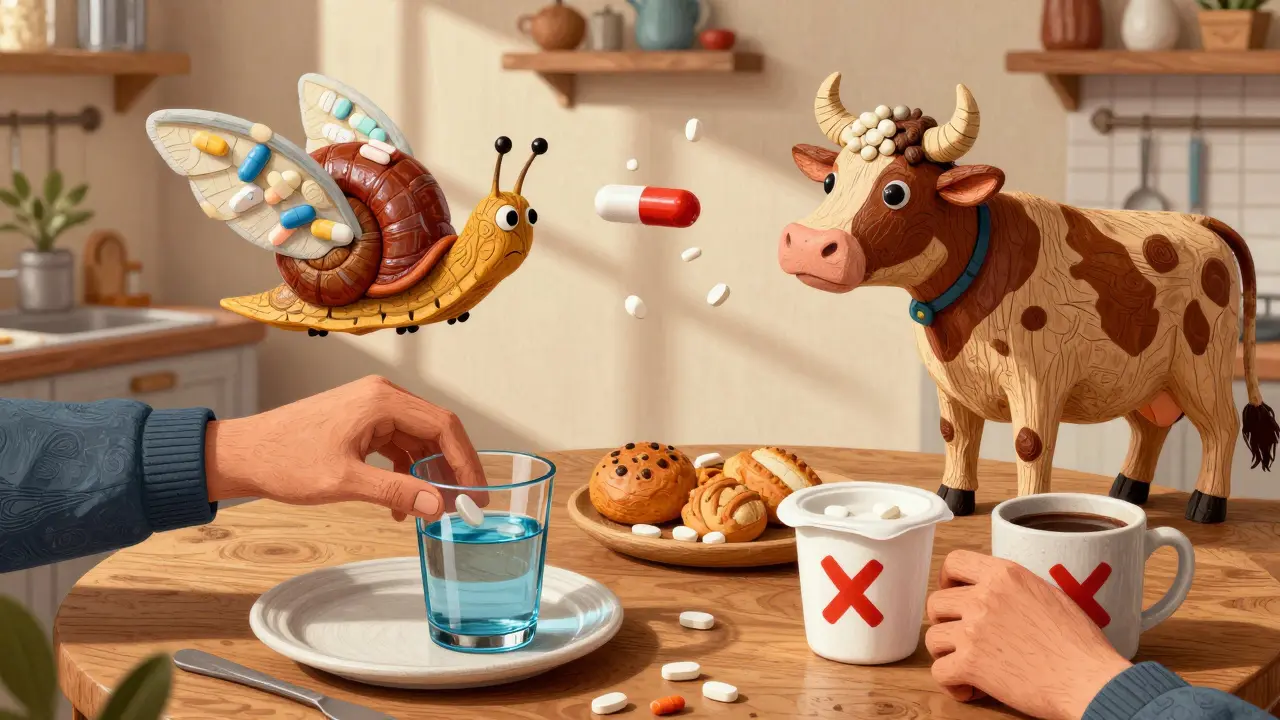
Most people aren’t trying to mess up. They’re confused. The instructions are vague. “Take with food” sounds simple-but how much food? What kind? When? A 2023 report from Express Scripts found 45% of patients misunderstand “take with food.” Thirty-two percent think it means a full meal, when for some drugs, a small snack (200-300 calories) is enough. Others take their thyroid pill with breakfast coffee, not realizing even a sip can block absorption. On Drugs.com, 62% of 1,247 comments about levothyroxine mention difficulty sticking to the empty stomach rule. Over a quarter still feel unwell despite taking their pill daily-because they’re taking it wrong. And the cost? Medication errors cost the U.S. healthcare system over $500 billion a year. Food-drug interactions make up about 8% of that. That’s billions spent treating avoidable side effects, hospitalizations, and failed treatments.How to Get It Right: Practical Tips
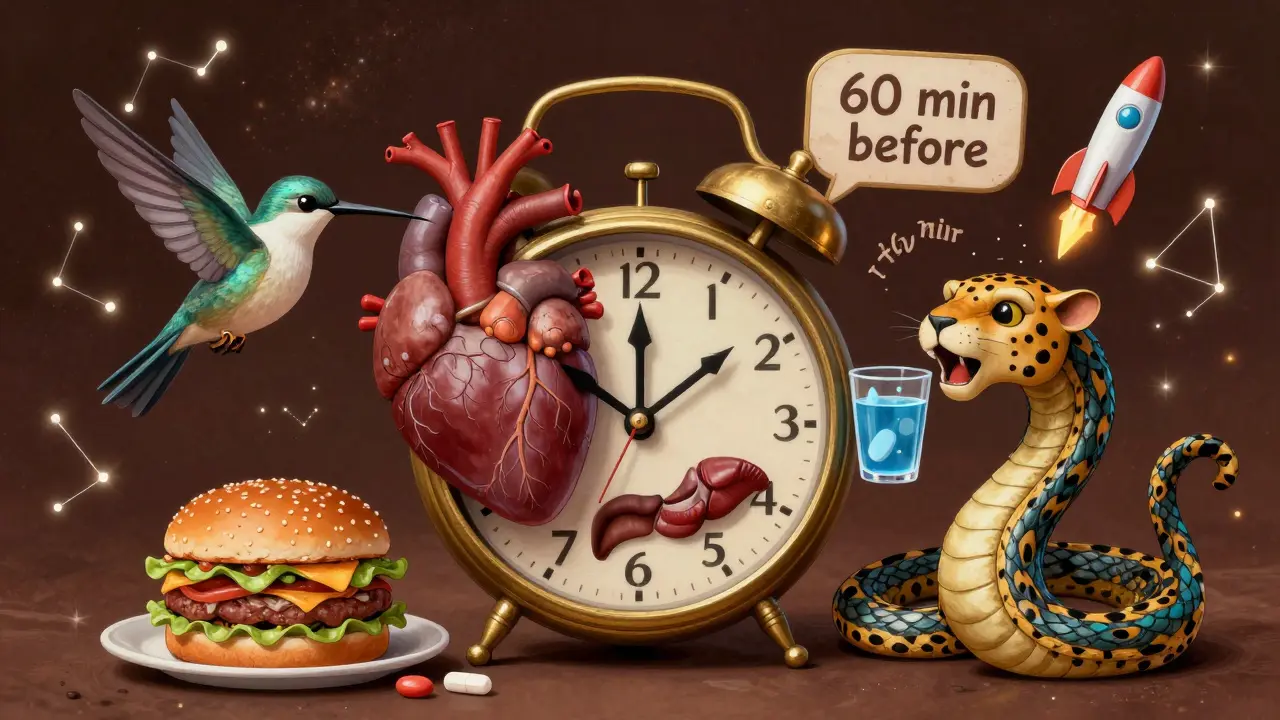
You don’t need a pharmacy degree to take your meds correctly. Here’s how to stay on track:- Read the label. If it says “take on empty stomach,” set a phone alarm 60 minutes before breakfast. If it says “take with food,” pair it with your regular meal.
- Use a pill organizer. Some organizers have compartments labeled “AM empty” and “AM with food.” They help build routine.
- Ask your pharmacist. They’re trained to spot interactions. Don’t just take the bottle and go. Ask: “Should I take this before, during, or after meals?”
- Watch your drinks. Grapefruit juice can interfere with over 85 drugs, including statins and blood pressure meds. Milk can block antibiotics. Water is usually safest.
- Be consistent. Even if timing isn’t critical, doing it the same way every day helps your body predict the drug’s effect.
The Bigger Picture: Why This Matters
As we age, we take more meds. By 2030, 55% of adults over 65 will be on five or more medications. Each one is a potential interaction. Elderly patients are 65% more likely to have food-drug problems. Regulators are catching on. Since 2020, the FDA has required food-effect labeling on 92% of new drugs. The American Society of Health-System Pharmacists updated guidelines in January 2024 to replace vague terms like “with food” with precise language: “within 30 minutes of meal initiation” or “minimum 60 minutes before first meal.” And science is evolving. New research in Nature Medicine (March 2024) shows that timing meds not just to meals-but to your body’s natural rhythms-can boost effectiveness by up to 30%. Imagine a pill that knows when you’re most likely to absorb it. This isn’t just about swallowing a pill. It’s about syncing your body’s chemistry with your daily life. The right timing turns a good drug into a great one. The wrong timing? It turns a lifesaver into a waste of money-and risk to your health.Frequently Asked Questions
Can I take my pill with a glass of milk?
It depends on the medicine. Milk contains calcium, which can block absorption of antibiotics like tetracycline, doxycycline, and ciprofloxacin. It can also interfere with thyroid meds and some osteoporosis drugs. Water is always the safest choice unless your doctor or label says otherwise.
What if I forget and take my thyroid pill with breakfast?
If you accidentally take levothyroxine with food, don’t double up. Wait until the next day and take it on an empty stomach as usual. Occasional slips won’t ruin your treatment, but if it happens often, your thyroid levels may stay off. Talk to your doctor about adjusting your schedule-some people take it at bedtime instead, which can work just as well if done consistently.
Do I need to wait after eating before taking medicine on an empty stomach?
Yes. If your medicine says “take on an empty stomach,” wait at least one hour after eating and two hours after a heavy meal. Your stomach needs time to empty. Even a small snack like a banana can delay absorption. If you’re unsure, wait two hours to be safe.
Can I take all my pills at once with my breakfast?
No. Many medications interact with each other, and food can affect them differently. For example, taking an antibiotic with calcium-rich food and a thyroid pill at the same time can block both. Always check each drug’s instructions. If you’re on multiple meds, ask your pharmacist for a personalized schedule.
Is it okay to take medicine with juice?
Avoid grapefruit juice-it interferes with over 85 medications, including statins, blood pressure drugs, and some antidepressants. Orange juice can block certain antibiotics and thyroid meds. Apple juice may reduce absorption of some allergy drugs. Stick to water unless your provider says otherwise.


