
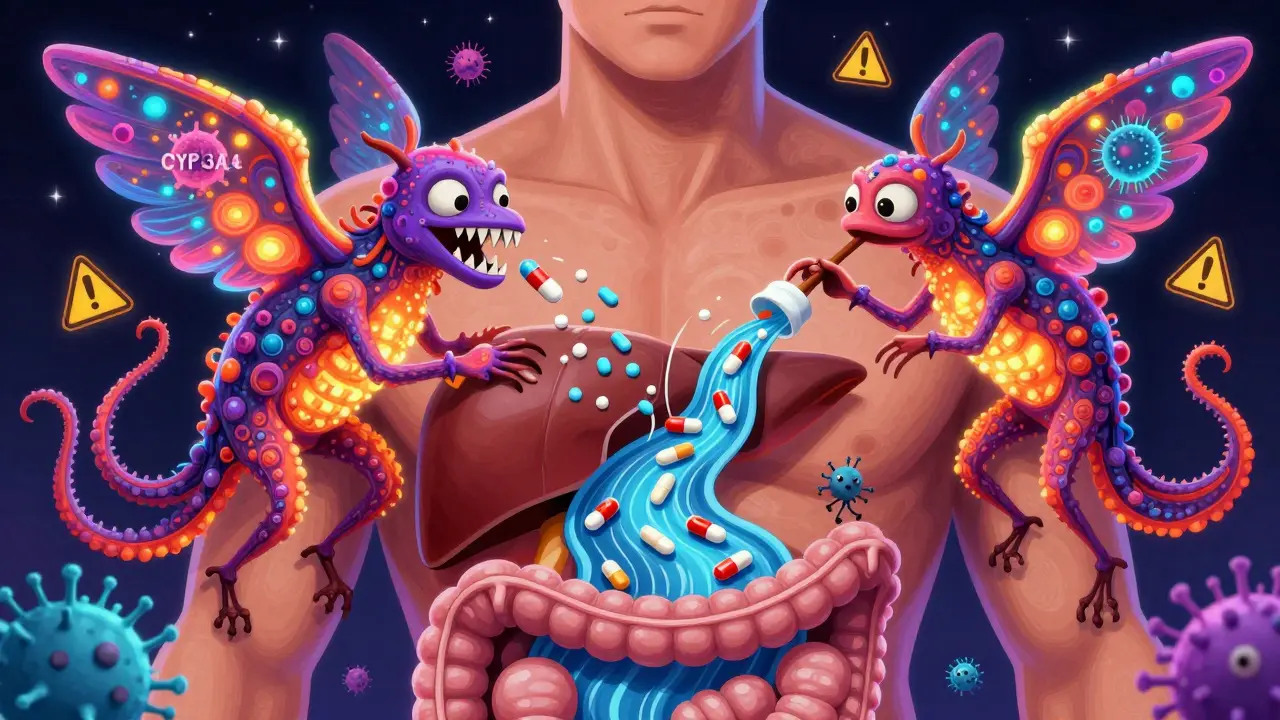
When you take an antiviral like darunavir, sofosbuvir, or even a boosted HIV regimen, you’re not just fighting a virus-you’re navigating a hidden battlefield inside your body. Two silent gatekeepers, CYP3A4 and P-glycoprotein, control whether your medication works, builds up to dangerous levels, or gets flushed out before it can help. These aren’t abstract concepts. They’re enzymes and transporters that decide how much of your drug actually reaches your bloodstream. And if you’re on other medications-blood thinners, cholesterol pills, anxiety meds, or even herbal supplements-the stakes are life or death.
What CYP3A4 and P-glycoprotein Actually Do
CYP3A4 is the most common enzyme in your liver and gut. It breaks down about half of all prescription drugs. Think of it like a shredder that chews up medication before it can do its job. P-glycoprotein (P-gp) is the bouncer at the door. It’s a pump that kicks drugs out of your cells, especially in the gut, brain, and kidneys. Together, they act as a double filter: CYP3A4 breaks the drug down, and P-gp pushes it back out. If both are working hard, your antiviral might not reach the concentration it needs to suppress the virus.
But here’s the twist: some antivirals don’t just get processed by these systems-they control them. Ritonavir, for example, was originally designed as an HIV drug. But doctors quickly noticed that when taken in small doses (100 mg), it shuts down CYP3A4 like flipping a switch. Suddenly, other drugs that used to get broken down fast now stick around longer. That’s why ritonavir became the original "booster"-it’s not fighting the virus. It’s holding the shredder still so other drugs can work.
The Real Danger: When Boosters Backfire
Boosting sounds smart. It lets you use lower doses of expensive antivirals. But it turns your body into a chemical minefield. Take simvastatin, a common cholesterol drug. Normally, it’s safe. But when taken with a ritonavir-boosted antiviral, its levels can spike by 1,760%. That’s not a typo. That’s enough to cause rhabdomyolysis-a condition where muscle tissue breaks down and can lead to kidney failure. The FDA warns about this in black box labels.
Even more dangerous are blood thinners like apixaban or warfarin. A 2021 case report in the Journal of Acquired Immune Deficiency Syndromes described a 68-year-old man who started darunavir/cobicistat and developed life-threatening internal bleeding. His anti-Xa levels hit 384 ng/mL-nearly double the safe range. He wasn’t taking anything unusual. Just the standard combo. The interaction slipped through because no one checked.
And it’s not just prescription drugs. St. John’s wort, a popular herbal remedy for mild depression, can slash ritonavir levels by 57%. Grapefruit juice? It does the opposite-boosts ritonavir by 23%. Both are common. Both are dangerous.
Why Some Antivirals Are Safer Than Others
Not all antivirals are created equal when it comes to interactions. Newer hepatitis C drugs like glecaprevir/pibrentasvir are designed to be cleaner. Only 17% of common medications need dose changes with this combo. Compare that to older regimens like paritaprevir/ritonavir/ombitasvir/dasabuvir, where 42% of drugs require adjustments. That’s more than 2 out of 5 medications you’re already taking.
Even among HIV drugs, the difference is stark. Ritonavir is a powerhouse inhibitor-but it’s messy. It also induces CYP1A2, which can lower levels of drugs like duloxetine or olanzapine. That’s why some patients on ritonavir get no interaction with certain antidepressants-it’s not that the drug is safe. It’s that two opposing forces cancel each other out. Cobicistat, a newer booster, doesn’t have this induction effect. It’s more predictable. But it has its own risks: it blocks kidney transporters, raising creatinine levels and masking true kidney function.
Sofosbuvir, a cornerstone of hepatitis C treatment, barely touches CYP3A4. But it’s a strong P-gp substrate. That means if you’re on a P-gp inhibitor like verapamil or cyclosporine, sofosbuvir levels can rise. Not as dramatically as with CYP3A4 drugs-but enough to matter.
What Clinicians Miss (And Why It’s Costing Lives)
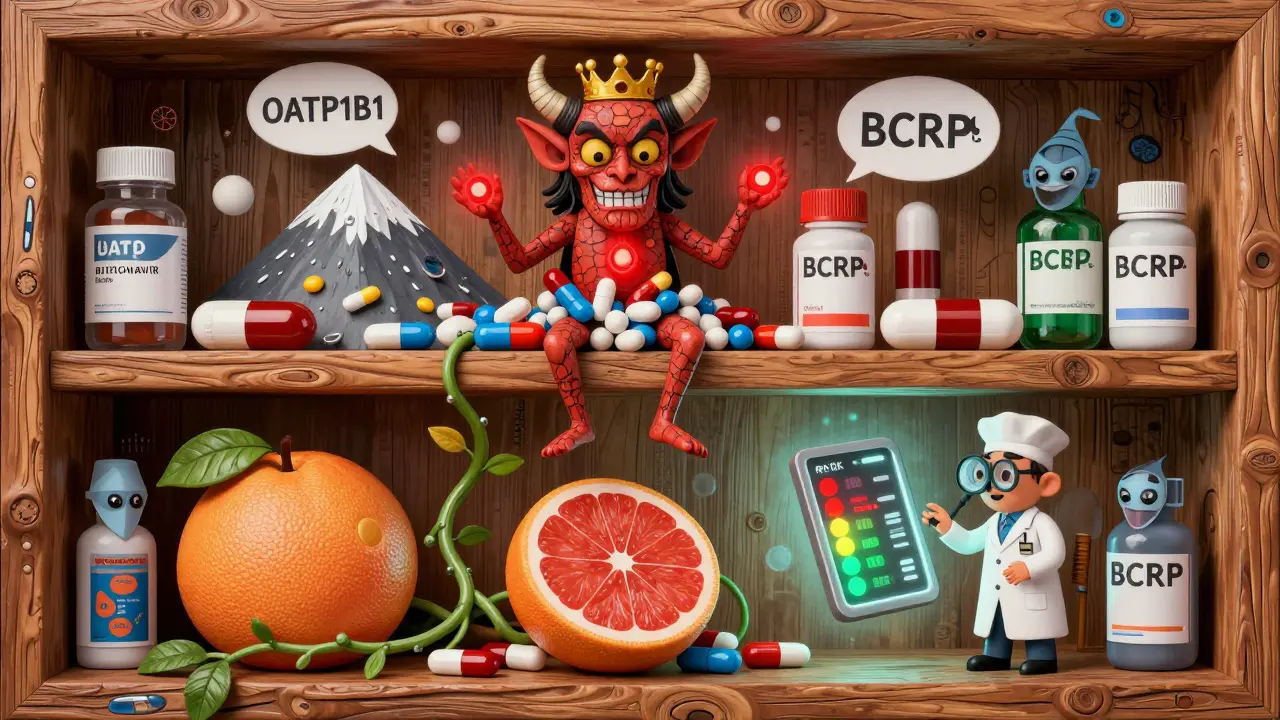
Most doctors know about CYP3A4. Fewer know about OATP1B1 or BCRP. Yet, according to Dr. Sharon Hillier, editor of Antimicrobial Agents and Chemotherapy, these lesser-known transporters caused 22% of serious adverse events in a major study-even though they accounted for only 8% of screening efforts. Why? Because everyone’s focused on the big one: CYP3A4.
Take grazoprevir, a hepatitis C drug. It’s contraindicated with cyclosporine. Why? Not because of CYP3A4. Because cyclosporine blocks OATP1B1, the transporter that brings grazoprevir into liver cells. Without it, the drug can’t reach its target. But if you block the transporter and inhibit CYP3A4 at the same time? You get a 17.3-fold spike in drug levels. That’s not a side effect. That’s a toxic overdose waiting to happen.
A 2021 study in The Lancet Infectious Diseases found that 17.3% of adverse events in HIV/hepatitis C co-infected patients were due to uncaught drug interactions. That’s not rare. That’s systemic. And it’s preventable.
How to Stay Safe: A Practical Checklist
You don’t need to be a pharmacologist to avoid these traps. Here’s what works:
- Make a full list-every pill, patch, supplement, and herbal product you take. Include over-the-counter painkillers, sleep aids, and vitamins. Don’t assume they’re "safe."
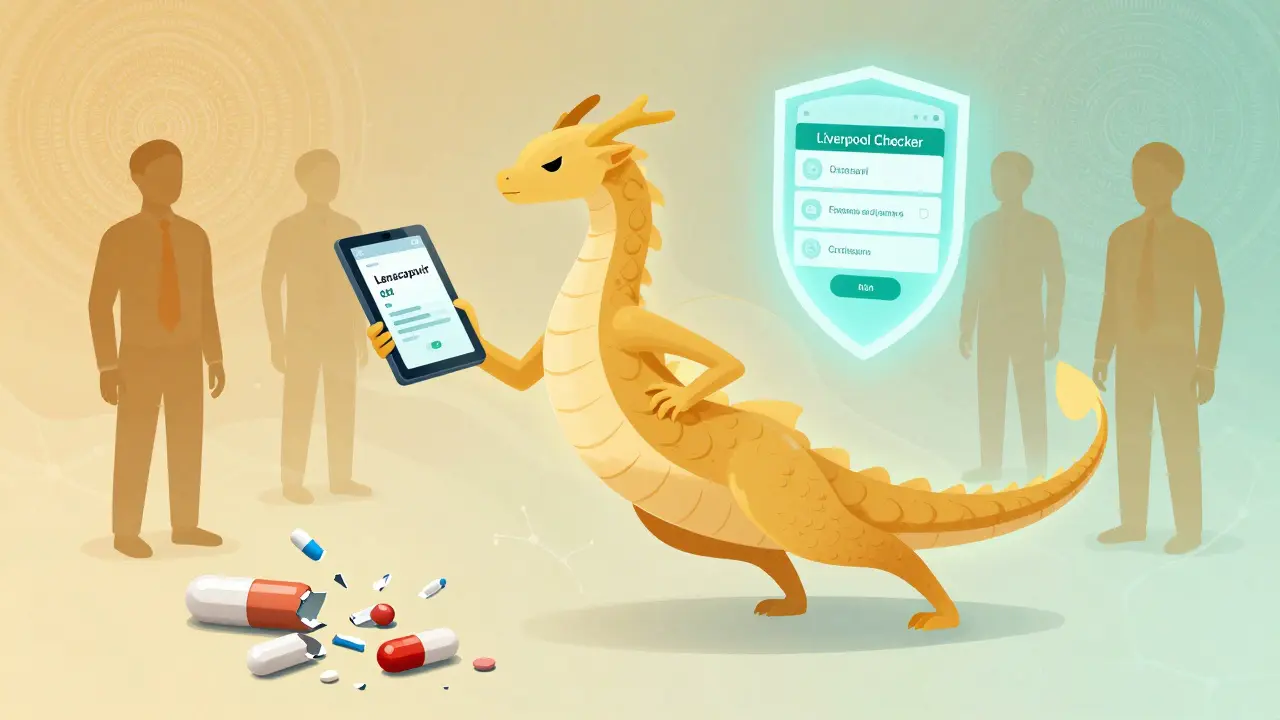
- Use the Liverpool HIV Interactions Checker-it’s free, web-based, and updated weekly. It’s used in 92% of European HIV clinics. Type in your antiviral and your other meds. It gives you a color-coded risk: red = stop, yellow = monitor, green = okay.
- Ask your pharmacist-not your doctor. Pharmacists are trained to spot interactions. They see your entire med list. They’re your best line of defense.
- Never start or stop anything without checking-even if it’s just melatonin or turmeric. One Reddit user, u/HIVWarrior, said his psychiatrist refused to prescribe any anxiety meds because of his antiviral regimen. He didn’t have to. There are safe options. He just needed the right tool to prove it.
- Wait a month-if you’re starting a new antiviral and need to add a high-risk drug like an anticoagulant or statin, wait at least 30 days. Let your body stabilize. Then check levels.
What’s Changing-and What’s Coming
The industry is catching on. Since 2012, the FDA and EMA have required every new antiviral to be tested against CYP3A4, P-gp, and three other transporters. Pharmaceutical companies now spend $2.8 to $4.1 million per drug just on interaction studies. That’s not cheap. But it’s cheaper than hospitalizations.
New drugs are being built with this in mind. Lenacapavir, approved in 2022, has almost no CYP interactions. That’s a game-changer. It’s given hope to older patients with multiple chronic conditions-diabetes, heart disease, depression-who can’t afford to swap out their meds.
And now, genetic testing is entering the picture. If you have the CYP3A5*3/*3 genotype (common in 85% of Caucasians), your body processes drugs like tacrolimus differently when mixed with ritonavir. Your exposure can be 2.3 times higher. In the future, we may test for this before prescribing.
But the real challenge isn’t the science. It’s the system. In the U.S., only 68% of clinics use systematic screening. In Europe, it’s 92%. The gap isn’t knowledge. It’s workflow. Epic EHR systems now auto-flag antiviral interactions. Mayo Clinic cut severe events by 31% after implementing them. That’s not magic. That’s accountability.
Bottom Line: Don’t Guess. Check.
Antiviral therapy isn’t just about killing the virus anymore. It’s about protecting your whole body from the collateral damage of drug interactions. CYP3A4 and P-glycoprotein aren’t enemies. They’re part of your biology. But when you throw in a booster, a statin, or a herbal tea, you’re changing the rules of the game.
You don’t need to memorize every enzyme. You don’t need to understand kinetic models. You just need to ask: "Is this safe with my antiviral?" And then use a trusted tool to find out. The difference between a life saved and a life lost isn’t always a new drug. Sometimes, it’s a 10-minute check on a free app.
Can I take grapefruit juice with my antiviral?
No. Grapefruit juice contains bergamottin, which inhibits CYP3A4 in your gut. This can cause your antiviral levels to spike by up to 23%, especially with ritonavir-boosted regimens. Even a single glass can affect drug levels for 24 hours. Avoid it completely.
Are all HIV antivirals equally risky for drug interactions?
No. Ritonavir-boosted regimens have the most interaction risks-up to 27% more than unboosted ones. Cobicistat is cleaner for CYP3A4 but affects kidney transporters. Newer drugs like doravirine and lenacapavir have minimal interaction profiles. Always check your specific regimen.
What should I do if I’m on warfarin and start an antiviral?
Stop and consult your doctor immediately. Warfarin is highly sensitive to CYP3A4 inhibitors. A single dose of ritonavir can push your INR into dangerous territory. You’ll need daily INR checks for at least two weeks after starting the antiviral. Never adjust your warfarin dose on your own.
Is it safe to use St. John’s wort with antivirals?
Absolutely not. St. John’s wort induces CYP3A4 and P-gp, causing antiviral levels to drop by up to 57%. This can lead to treatment failure and drug resistance. It’s one of the most dangerous herbal interactions in HIV and hepatitis C care.
Why do some doctors say my anxiety meds won’t work with my antiviral?
Some antivirals, especially ritonavir-boosted ones, can either increase or decrease levels of antidepressants and anti-anxiety drugs. For example, alprazolam levels can rise 305%, while duloxetine might drop due to CYP1A2 induction. It’s not that they won’t work-it’s that they might work too well or not at all. There are safe alternatives. Ask for a drug interaction check using the Liverpool tool.
How often should I check for drug interactions?
Every time your medication list changes. That includes new prescriptions, over-the-counter drugs, supplements, or even herbal teas. Even a single new pill can trigger a dangerous interaction. Use the Liverpool HIV Interactions Checker every time you add or remove a drug.


