
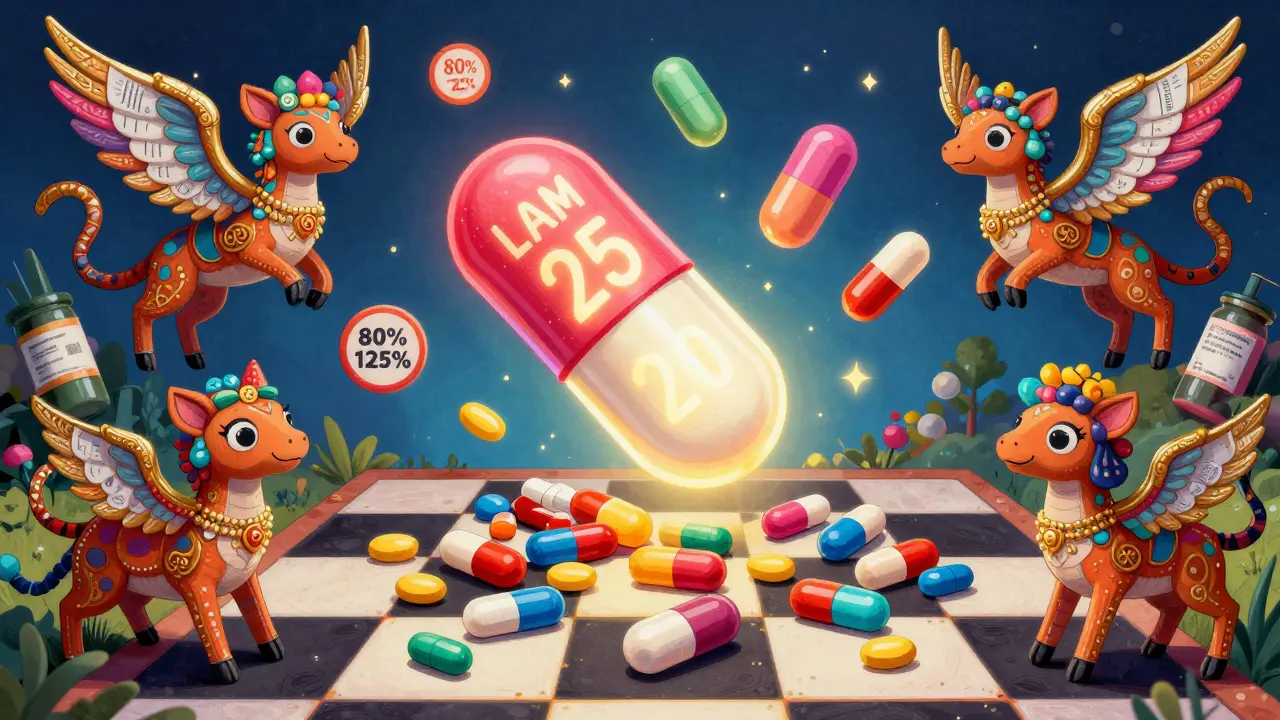
When you pick up your prescription and see that your pills look different this time, it’s normal to feel uneasy. Maybe they’re a different color, smaller, or have a weird imprint you’ve never seen before. You might wonder: Is this still the same medicine? The short answer is yes - if it’s a legitimate generic. But not all generics are made the same, and understanding how to compare manufacturers and pill appearance can save you from confusion, anxiety, or even mistakes.
Why Do Generic Pills Look Different?
Generic drugs must contain the exact same active ingredient as the brand-name version. That’s the law. But the FDA doesn’t require them to look the same. Why? Because trademark laws protect brand-name companies from copycats - even if the medicine inside is identical. So if your brand-name pill is a blue oval, the generic can’t be. It has to be different in color, shape, size, or imprint. This isn’t a trick. It’s a legal requirement. In fact, 78% of generic pills differ in color, 65% in shape, and 42% in size, according to a 2020 study in Nature Scientific Reports. The imprint - the letters or numbers stamped on the pill - is the only thing that’s standardized. Every pill sold in the U.S. must have a unique imprint so pharmacists and patients can identify it. That’s why you’ll see things like "LAM 25" or "V 20" on your tablets.What Makes a Generic Drug Safe?
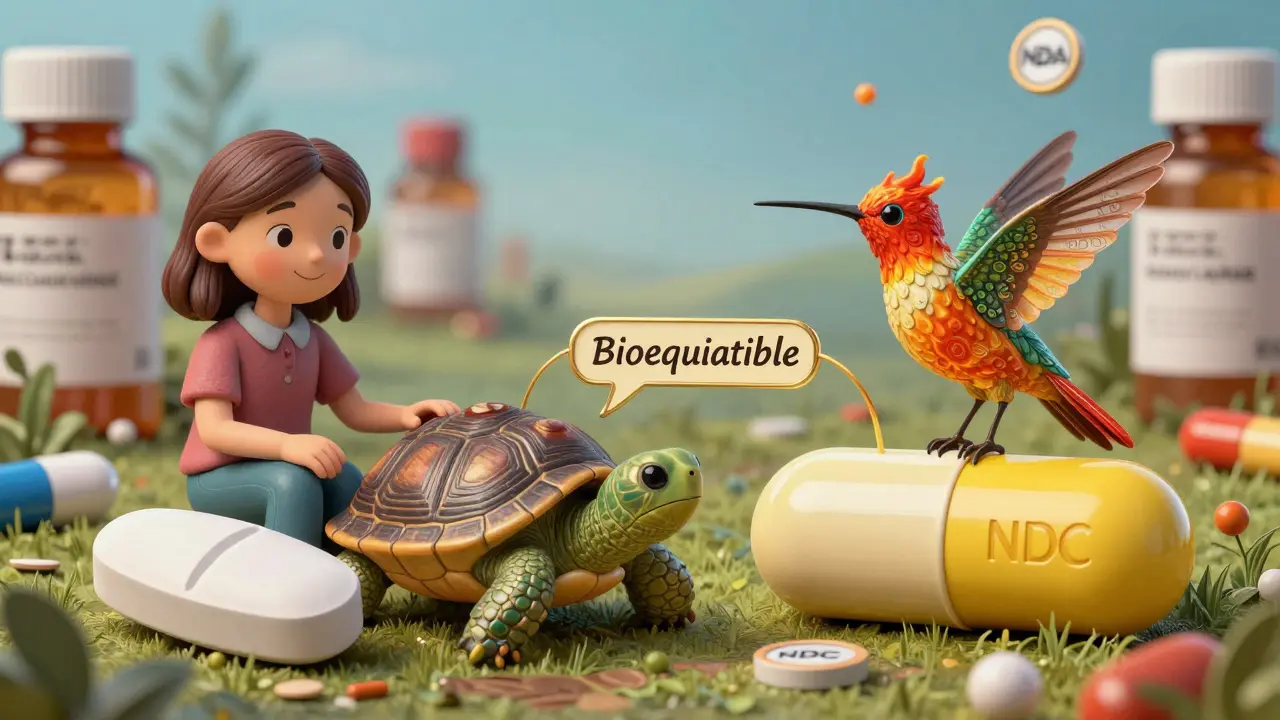
The real question isn’t about looks - it’s about performance. The FDA requires every generic drug to prove it’s bioequivalent to the brand-name version. That means it must be absorbed into your bloodstream at the same rate and to the same extent. The standard is strict: the generic’s absorption must fall within 80% to 125% of the brand’s, measured by two key numbers - Cmax (peak concentration) and AUC (total exposure over time). A landmark FDA study of over 2,000 bioequivalence tests found that, on average, generics differed from brand-name drugs by just 3.5%. That’s less than the variation you’d see between two batches of the same brand-name drug made months apart. For most people, this difference is invisible - and harmless. But there’s one big exception: narrow therapeutic index (NTID) drugs. These are medications where even a tiny change in blood levels can cause serious problems. Examples include warfarin (blood thinner), levothyroxine (thyroid hormone), and lithium (for bipolar disorder). For these, the FDA tightens the bioequivalence range to 90-111%. Even then, studies show generics work just as well - but switching between manufacturers can sometimes cause subtle shifts. That’s why doctors often recommend sticking with the same generic brand for NTID drugs.Who Makes Generic Pills - and Does It Matter?
Not all generic manufacturers are created equal. The biggest players are Teva, Viatris (which includes Mylan), and Sandoz. Together, they make more than half of all generic pills sold in the U.S. But there are hundreds of others - from large international firms to smaller regional producers. First-to-market generics often have the highest quality control because they’re the ones who invested in proving bioequivalence. They usually capture 60-70% of the market at first. But as more companies enter, prices drop - sometimes by 80% or more. That’s good for your wallet, but it can mean switching between manufacturers more often. Some manufacturers specialize in complex generics - like extended-release pills, inhalers, or injectables. These take years to develop and require more testing. Companies like Hikma Pharmaceuticals focus on these, and their products often have fewer variability issues because they’re made under tighter controls. The bottom line: a generic made by Teva isn’t inherently better than one made by a smaller company - but consistency matters. If you’ve been taking a generic from one manufacturer and feel fine, switching to a different one might not be necessary, especially for NTID drugs.
How to Identify Your Pills
You don’t need to be a pharmacist to tell if your pill is right. Here’s how to check:- Look at the imprint. This is the most reliable identifier. Write it down or take a photo. Use the Drugs.com Pill Identifier - it’s free, trusted, and used by over 12 million people monthly. Just enter the color, shape, and imprint.
- Check the NDC code. It’s on the bottle and looks like a 10- or 11-digit number. Each NDC links to a specific manufacturer, strength, and package size. You can look it up in the FDA’s National Drug Code Directory.
- Compare to your last prescription. If the pill looks different but the NDC and imprint match what’s listed on your old bottle, you’re fine. If they’re different, ask your pharmacist.
When to Be Concerned
Most people never have issues switching generics. But here are red flags:- You’re taking a narrow therapeutic index drug (like warfarin or levothyroxine) and you feel off - dizzy, tired, heart racing, or unusually anxious.
- You notice a change in effectiveness. For example, your seizures aren’t controlled, your thyroid symptoms return, or your depression worsens after a switch.
- You get a new pill that looks completely different, and the imprint doesn’t match any known drug in the database.
What Patients Say - Real Stories
A 2022 Consumer Reports survey found that 41% of patients worry about pill appearance changes. One woman wrote: "I’ve been on the same generic for five years. Last month, my pills went from white ovals to yellow capsules. I thought I’d been given the wrong meds. I didn’t take them for three days until I called my pharmacist. Turns out, it was the same drug - just a different maker. I felt stupid, but also relieved. I wish I’d known this before." On Reddit’s r/pharmacy, 68% of users reported no issues with switching. But 22% said they noticed changes - mostly with antidepressants and antiseizure meds. Many said they felt "better" on one brand versus another, even though tests show no difference. That’s likely due to the placebo effect - or, in some cases, subtle differences in inactive ingredients that affect how the pill dissolves. The good news? Most people save an average of $265 a month on generics versus brand-name drugs. That’s real money. And for chronic conditions like high blood pressure or diabetes, generics are just as effective.What You Can Do
- Keep a pill log. Note the color, shape, imprint, and manufacturer each time you refill. Use your phone’s notes app. - Ask for the same manufacturer. If you’ve found one that works well, ask your pharmacist to order it. They can often accommodate. - Don’t stop taking your meds. If your pill looks different, don’t assume it’s wrong. Call your pharmacy first. - Use the Drugs.com app. It’s free, accurate, and works offline. Take a photo of your pill and let it identify it. - For NTID drugs, stick with one brand. Talk to your doctor about whether DAW-1 is right for you. The system works - most of the time. Generic drugs save the U.S. healthcare system over $300 billion a year. They’re safe, effective, and regulated. But they’re not all identical in appearance. Learning how to read the pill - not just the label - gives you control, confidence, and peace of mind.Why do generic pills look different from brand-name pills?
Generic pills look different because U.S. trademark laws prevent them from copying the exact color, shape, or design of brand-name drugs. Even though the active ingredient is identical, the FDA requires generics to have unique appearances to avoid confusion and protect brand trademarks. The imprint (letters or numbers on the pill) is the only standardized identifier.
Are generic drugs as effective as brand-name drugs?
Yes, for the vast majority of medications. The FDA requires generics to prove bioequivalence - meaning they deliver the same amount of active ingredient into your bloodstream at the same rate as the brand-name version. Studies show the average difference is just 3.5%, which is less than normal batch-to-batch variation in brand-name drugs. The exception is narrow therapeutic index drugs, where small changes can matter - and even then, generics are still safe when properly monitored.
How can I tell if my generic pill is from a different manufacturer?
Check the imprint, color, and shape - these change between manufacturers. The most reliable way is to look at the National Drug Code (NDC) on your prescription bottle. You can search this code in the FDA’s NDC Directory to find the exact manufacturer. Apps like Drugs.com Pill Identifier also let you match your pill’s appearance to its identity using photos or manual entry.
Should I be worried if my generic pill changes color or shape?
No, not if the imprint and NDC code match your previous prescription. Appearance changes are normal when switching manufacturers. The FDA allows this because the active ingredient hasn’t changed. But if you’re taking a narrow therapeutic index drug like warfarin or levothyroxine, and you feel different after the switch, contact your doctor. Otherwise, it’s just a visual change - not a safety issue.
Can I ask my pharmacist to give me the same generic manufacturer every time?
Yes. You can ask your pharmacist to dispense the same generic brand you’ve been using. They can often order it for you, especially if you’ve had no issues with it. For high-risk medications, your doctor can write "dispense as written" (DAW-1) on your prescription, which legally prevents substitution. This is common for drugs like thyroid medication or seizure controls.
What should I do if I think my generic medication isn’t working anymore?
Don’t stop taking it. First, check if your pill looks different - that might mean a new manufacturer. Then, call your pharmacist to confirm the NDC and manufacturer match your previous fill. If everything checks out but you’re still feeling off, schedule an appointment with your doctor. For narrow therapeutic index drugs, a blood test might be needed to check levels. Never assume a change in effectiveness is due to the generic - it could be another factor like diet, stress, or another medication.


