
Why Getting Your Drug Allergies Right in Your Medical Records Matters
If you’ve ever been told you’re allergic to penicillin but never had a real reaction, you’re not alone. Around 90% of people who say they’re allergic to penicillin aren’t actually allergic when tested. But if that vague note stays in your medical file, doctors might avoid giving you the best, cheapest, or most effective antibiotic - not because it’s dangerous for you, but because the record says it is.
That’s why documenting your drug allergies accurately isn’t just a formality. It’s a life-saving step. Incomplete or wrong allergy info contributes to about 6.5% of all medication errors, according to a 2019 study in the Journal of the American Medical Informatics Association. Poor documentation can lead to dangerous reactions, unnecessary hospital stays, or even death. The Institute of Medicine estimated back in 2006 that better allergy records could prevent over 7,000 deaths each year in the U.S. alone.
What Exactly Counts as a Drug Allergy?
Not every bad reaction is an allergy. There’s a big difference between a true immune system response - like hives, swelling, trouble breathing, or anaphylaxis - and side effects like nausea, headaches, or stomach upset. These are called intolerances or adverse reactions, not allergies.
But here’s the problem: patients often say, “I’m allergic to ibuprofen” because it gave them a stomach ache. Or “I’m allergic to penicillin” because they got a rash as a kid - and no one ever tested it. Doctors have to take those statements seriously, even if they’re inaccurate. That’s why your job is to be specific.
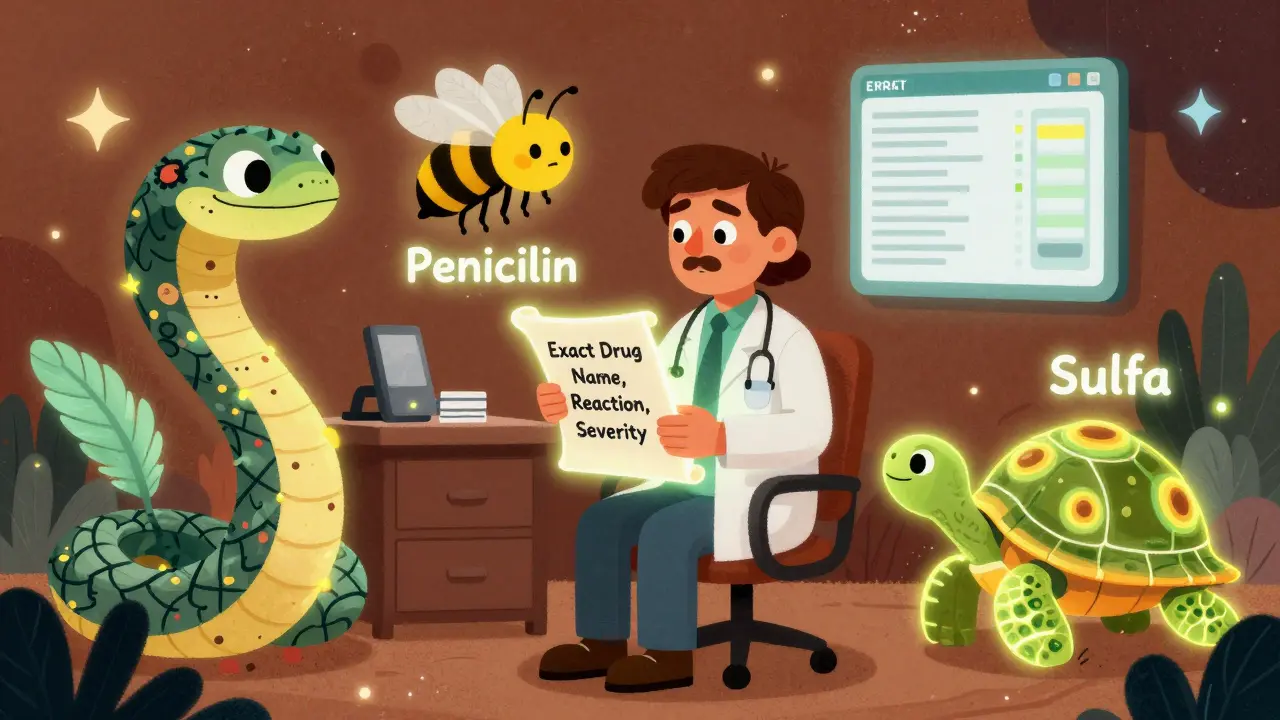
Don’t just say “penicillin.” Say “ampicillin - caused hives and swelling around my mouth 10 years ago.” Don’t say “sulfa.” Say “sulfamethoxazole - caused severe blistering rash in 2018.” The more precise you are, the safer your care becomes.
What Needs to Be in Your Medical Record
U.S. healthcare rules, set by CMS and the Joint Commission, require that your drug allergies be clearly documented in your medical record - and not just as a checkbox. Every entry must include three things:
- The exact drug name - use the generic name, not the brand. Say “amoxicillin,” not “Amoxil.”
- The reaction - describe what happened: rash, vomiting, throat tightness, low blood pressure, etc.
- The severity and timing - was it mild, moderate, or life-threatening? When did it happen? Did you need emergency treatment?
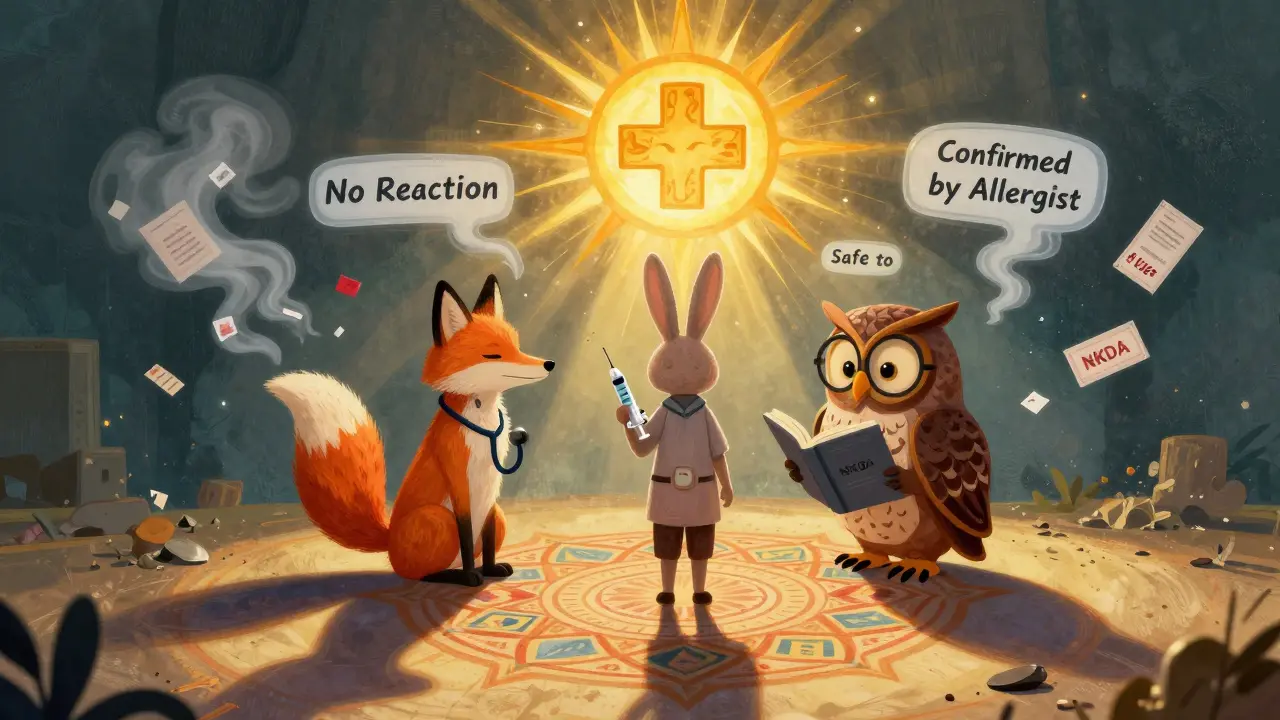
If you have no known allergies, your record must still say “No Known Drug Allergies” (NKDA). Leaving it blank is just as risky as having the wrong info.
These rules aren’t suggestions. Hospitals and clinics are audited. If they don’t meet the 80% documentation rate required by CMS, they risk losing Medicare funding. That’s why your doctor’s office now has mandatory fields in their electronic system - and why they’re asking you the same questions over and over.

How to Make Sure Your Allergy Info Is Accurate
Before your next appointment, take five minutes to review your own history. Ask yourself:
- Which drugs caused a reaction? Be specific.
- What did it feel like? Did your skin itch? Did you feel like you couldn’t breathe?
- Did you go to the ER? Were you given epinephrine or steroids?
- Has this happened more than once?
Write it down. Bring it with you. If you’re unsure, say so. You don’t need to guess. Doctors can refer you to an allergist for testing - especially for common drugs like penicillin, where over 90% of reported allergies turn out to be false.
One study at Massachusetts General Hospital found that after doing structured interviews with patients, 61% needed their allergy records updated. Over 200 vague entries were changed to accurate ones. That’s not just paperwork - that’s better care.
How Electronic Health Records (EHRs) Help - and Hurt
Most clinics now use electronic health records (EHRs) like Epic, Cerner, or Meditech. These systems are designed to flag potential drug-allergy conflicts before a prescription is written. When done right, they cut allergy-related errors by up to 55%, according to the NCBI.
But here’s the catch: if your allergy is entered wrong, the system will still warn doctors - even if the warning is based on bad data. So if your record says “allergic to penicillin” with no details, the system will block every penicillin-type drug, even ones that are safe for you.
That’s why accuracy matters more than ever. The 2023 update to federal rules now requires EHRs to use the FHIR standard, which makes it easier for your allergy info to follow you between hospitals, pharmacies, and specialists. But if your data is messy, it won’t help anyone - not even the computer.
What to Do If You’re Not Sure
If you’re uncertain whether you’ve ever had a real allergic reaction, don’t assume. Don’t guess. Don’t just repeat what your mom told you.
Ask your doctor about a referral to an allergist. Skin tests or oral challenges under supervision can confirm or rule out allergies - especially for antibiotics, NSAIDs, and anesthesia drugs. Many people who avoid penicillin for decades turn out to be perfectly fine with it after testing.
And if you’ve had a reaction in the past, even if it was years ago, don’t assume it’s gone. Some allergies fade. Others don’t. Only testing can tell you for sure.
What Happens If You Don’t Get It Right
Imagine you’re rushed to the ER with a severe infection. The best antibiotic is penicillin - but your chart says “allergic.” The doctor gives you a stronger, more expensive, and less effective drug instead. You get sicker. You stay in the hospital longer. Your recovery takes weeks instead of days.
This isn’t hypothetical. It happens every day. Incomplete allergy records are a top contributor to preventable harm in hospitals. The Joint Commission calls it a “sentinel event” - a serious, often avoidable mistake.
Worse, if you’re mislabeled as allergic, you might be given drugs with worse side effects - like vancomycin or fluoroquinolones - which carry higher risks of kidney damage, tendon rupture, or C. diff infections.
How to Keep Your Records Updated
You don’t need to update your allergy list at every visit - but you should review it at least once a year, or after any new reaction. If you’ve had a new reaction, tell your doctor immediately. If you’ve had a test that cleared you of an old allergy, make sure it’s removed.
Some clinics now offer patient portals where you can update your own allergy list. Use them. If your portal doesn’t let you edit it, ask your provider to do it during your next visit. Write it down: “Removed penicillin allergy - confirmed by allergist on [date].”
And if you’re switching doctors or hospitals, bring a printed copy of your current allergy list. Don’t rely on them to find it in their system.
Final Reminder: Be Specific, Be Honest, Be Proactive
Drug allergy documentation isn’t just the doctor’s job. It’s yours too. You’re the only one who knows what your body has actually done. Don’t let vague memories or outdated labels put you at risk.
Next time you’re asked about allergies, don’t just say “yes” or “no.” Say: “I had a rash after taking amoxicillin in 2020 - it went away with antihistamines.” Or: “I’ve never had a reaction to any drug - I’m not allergic to anything.”
That’s how you keep yourself safe. That’s how you help your care team make the right choices. And that’s how you turn a simple form into a shield against harm.


