
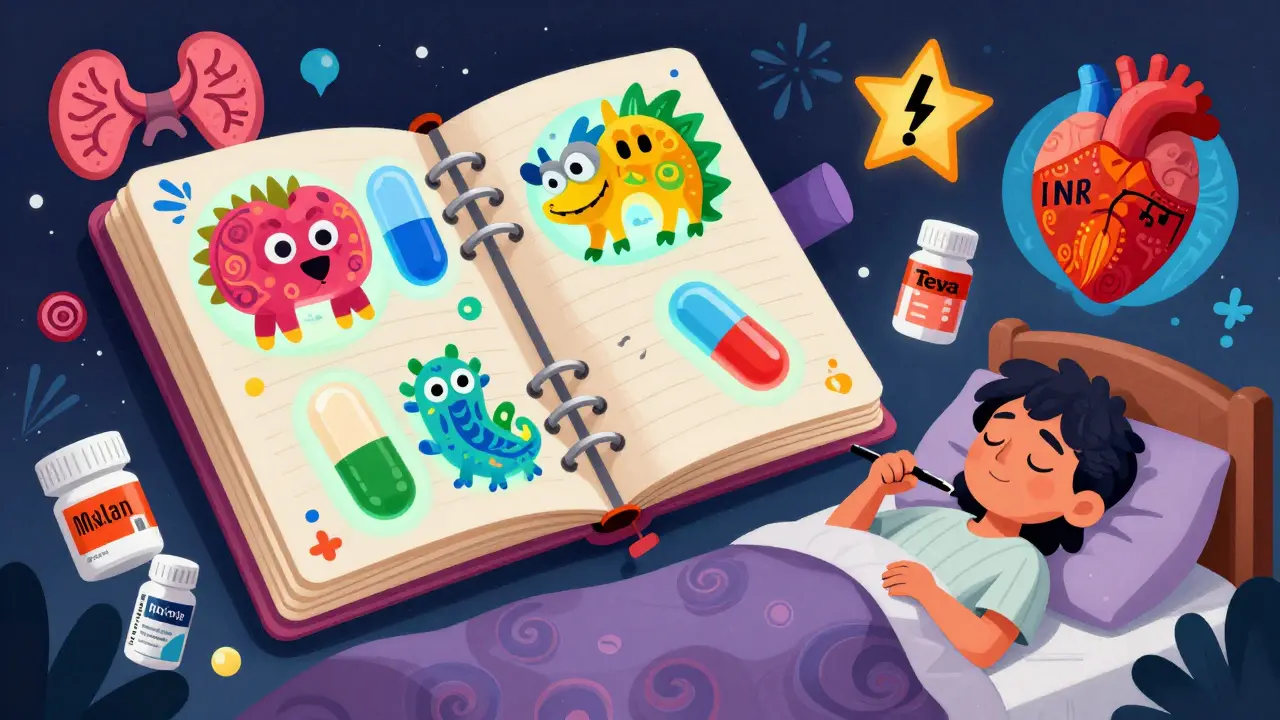
Switching from brand-name drugs to generics can save you hundreds of dollars a year. In Australia, generics make up more than 80% of prescriptions filled, and the savings are real-some medications cost under $5 instead of $50 or more. But here’s the thing: not all generics work the same way for everyone. Even though they’re supposed to be identical, some people notice changes in how they feel after the switch. That’s where keeping a medication journal comes in.
Why Your Body Might React Differently to Generics
Generics are required to contain the same active ingredient as the brand-name drug, and they must be absorbed into your bloodstream within a certain range-80% to 125% of the original. That sounds precise, but it’s actually a wide gap. Two different generic versions of the same drug can vary by up to 45% in how quickly they work. For most people, this doesn’t matter. But for those on drugs with a narrow therapeutic index-like warfarin, levothyroxine, or seizure medications-even small differences can cause real problems. A 2023 study in the Journal of Managed Care & Pharmacy found that 7.3% of patients on generic antiepileptics had breakthrough seizures after switching manufacturers. That’s not common, but it’s enough to warrant attention. If you’ve noticed new dizziness, mood swings, fatigue, or a return of symptoms after switching to a cheaper version, it’s not all in your head. You might be reacting to a different filler, coating, or manufacturing process.What to Write Down in Your Medication Journal
A good medication journal isn’t just a list of pills you took. It’s a record of how your body responded. Here’s what to track:- Medication name-both brand and generic (e.g., Synthroid vs. levothyroxine by Mylan)
- Manufacturer-look at the pill or bottle. Companies like Mylan, Dr. Reddy’s, or Teva make different versions
- Lot number-found on the packaging. If you have a bad reaction, this helps trace the batch
- Physical appearance-color, shape, score lines, imprint code. If your pill looks different, write it down. About 33% of patients get confused or anxious when their pills change shape or color
- Dosage and timing-did you take it with food? At the same time every day?
- Symptoms-use a simple 1-10 scale for pain, anxiety, fatigue, or mood. Note when they started, how long they lasted, and if they improved after switching back
- Objective data-if you monitor blood pressure, blood sugar, or INR levels, record those numbers. For thyroid patients, TSH levels matter
- Missed doses-sometimes side effects aren’t from the drug itself, but from inconsistent timing
Don’t overcomplicate it. You don’t need to write essays. Just jot down the essentials each day. A 2023 study in the Journal of Patient Experience found that patients using structured templates were 63% more likely to spot meaningful changes than those using free-form notes.
Paper vs. Digital: Which Works Better?
Some people swear by a notebook. Others prefer apps. Both work-but which one fits your life?Paper journals are simple, reliable, and don’t need batteries. The CDC recommends tear-off sheets with carbon copies so you can leave one copy with your doctor. A 100-page pad costs under $5. Older adults, especially those over 65, still prefer paper-62% do, according to AARP’s 2022 survey.
Digital apps like Medisafe or MyTherapy let you set reminders, track symptoms with sliders, and even export data to share with your pharmacist. Medisafe has over 150,000 reviews and a 4.7/5 rating on the App Store. The catch? You need to remember to open the app. One study found that patients who used phone alarms tied to their pill times were 40% more consistent with logging.
If you’re tech-savvy and already use your phone for everything, go digital. If you’re not sure, start with paper. You can always switch later.

When Journaling Makes the Biggest Difference
Not every medication needs a journal. But for these, it’s critical:- Thyroid meds (levothyroxine): Small changes in absorption can throw your TSH levels off. One Reddit user tracked three different generic brands and found her TSH jumped from 1.2 to 8.7 after switching manufacturers. Her endocrinologist switched her back to brand-name-and her levels stabilized in weeks.
- Antiseizure drugs: Even a 10% drop in blood levels can trigger seizures. The Epilepsy Foundation offers a free, downloadable tracker specifically for this.
- Blood thinners (warfarin): INR levels must stay tight. A 2013 Cleveland Clinic case showed patients on a new generic tacrolimus had dangerous drops in immunosuppression levels after heart transplants.
- Antidepressants: Some people report feeling “off” after switching generics, even if lab tests show no change. Journaling helps distinguish between true side effects and normal mood fluctuations.
For drugs like statins or antibiotics, journaling is less critical. But if you’re switching between multiple generic brands to save money, tracking can help you find the one that works best-for you.
What to Do When You Spot a Pattern
You’ve been journaling for a few weeks. You notice: every time you get the Mylan version of your generic blood pressure pill, your systolic number spikes by 15 points. What now?- Don’t stop taking it. That’s dangerous.
- Don’t assume it’s “all in your head.”
- Bring your journal to your next appointment. Show your doctor the dates, symptoms, and numbers.
Studies show patients who bring medication journals to appointments have 32% fewer unnecessary medication changes and 27% higher adherence. Your pharmacist can also help. Kaiser Permanente’s program found that pharmacist-led journal reviews reduced generic-related medication changes by 44%.
If your doctor dismisses your concerns, ask for a blood test-serum levels for drugs like levothyroxine or antiepileptics can confirm if absorption has changed. If they still won’t act, request a return to the brand-name version or ask for a different generic manufacturer. You have the right to be heard.
Common Mistakes and How to Avoid Them
Most people who start journaling quit within three months. Why? Here’s what goes wrong:- Too much detail-You don’t need to write a novel. Stick to the key fields.
- Waiting too long to start-Journal from day one of the switch. Otherwise, you won’t know what changed.
- Not recording lot numbers-That’s how you trace if a bad batch caused the issue.
- Ignoring physical differences-A different color or shape might seem trivial, but it’s a clue.
- Assuming all generics are equal-They’re not. Two generics with the same name can come from different factories with different quality controls.
Also, don’t panic over small fluctuations. The FDA says 90% of generic switches show no clinical difference. But if you feel worse consistently with one brand, it’s worth investigating.

The Bigger Picture: Why This Matters
You might think this is just about saving money. But it’s more than that. The FDA admitted in 2024 that their system doesn’t fully capture real-world patient experiences with generics. In the last three years, patient journals helped trigger 142 manufacturing alerts and label changes. Your data matters.As generics become even more common-projected to hit 95% of prescriptions by 2027-your journal could help protect not just yourself, but others. If enough people report the same issue with a specific manufacturer, regulators can investigate. That’s how recalls and safety updates happen.
And if you’re on a tight budget, journaling helps you avoid costly mistakes. A 2019 study found that 22% of patients misinterpreted minor side effects as treatment failure and went to the ER-each visit costing an average of $187. A few minutes a day can save you hundreds.
Getting Started: Your Simple 5-Step Plan
1. Choose your tool-Grab a notebook or download Medisafe or MyTherapy. 2. Write down your first entry-Include the drug name, manufacturer, lot number, and how you feel today. 3. Set a daily reminder-Tie it to when you take your pill. Even 30 seconds counts. 4. Track for 4 weeks-That’s long enough to spot patterns. 5. Bring it to your next appointment-Don’t just hand it over. Say: “I noticed something. Can we look at this together?”You don’t need to be a scientist. You just need to pay attention. Your body is telling you something. A medication journal is how you listen.
Can I trust all generic medications?
Most generics are safe and effective. But not all are made the same. The FDA requires them to be bioequivalent, but manufacturing quality varies by company and country. Some foreign facilities haven’t been inspected in years. If you notice a consistent change in how you feel after switching to a new generic, it’s worth tracking-and possibly switching back.
What if my pharmacist changes my generic without telling me?
Pharmacists can substitute generics unless your prescription says “Dispense as Written” or “Brand Necessary.” Always check the label and pill appearance. If it looks different, ask. You have the right to know what you’re taking. Keep your journal updated with each change-even if it’s unexpected.
Do I need to journal for every medication?
No. Focus on drugs with a narrow therapeutic index: thyroid meds, blood thinners, seizure drugs, immunosuppressants, and some antidepressants. For antibiotics or pain relievers, journaling is usually unnecessary unless you notice unusual side effects.
How long should I keep a journal before showing it to my doctor?
Four weeks is ideal. That’s enough time to see patterns, especially for medications that take days or weeks to reach steady levels. For fast-acting drugs like blood pressure pills or pain relievers, even a week can show clear trends.
Are digital journals secure and private?
Apps like Medisafe and MyTherapy are HIPAA-compliant and encrypt your data. But avoid using general note apps like Notes or Google Keep for sensitive health info. If you’re unsure, ask your pharmacist for recommended tools. Paper journals are always private-no hacking risk.
Next Steps: What to Do If You’re Not Sure
If you’re just starting out and feel overwhelmed:- Start with one medication-the one you’re most worried about.
- Use the CDC’s free printable template (search “CDC medication tracking form”).
- Ask your pharmacist to help you identify the manufacturer and lot number on your bottle.
- Join online communities like MyGenericStory.org to see how others track their experiences.
There’s no right way to journal-only the way that works for you. The goal isn’t perfection. It’s awareness. Your body knows when something’s off. You just need to give it a voice.


