
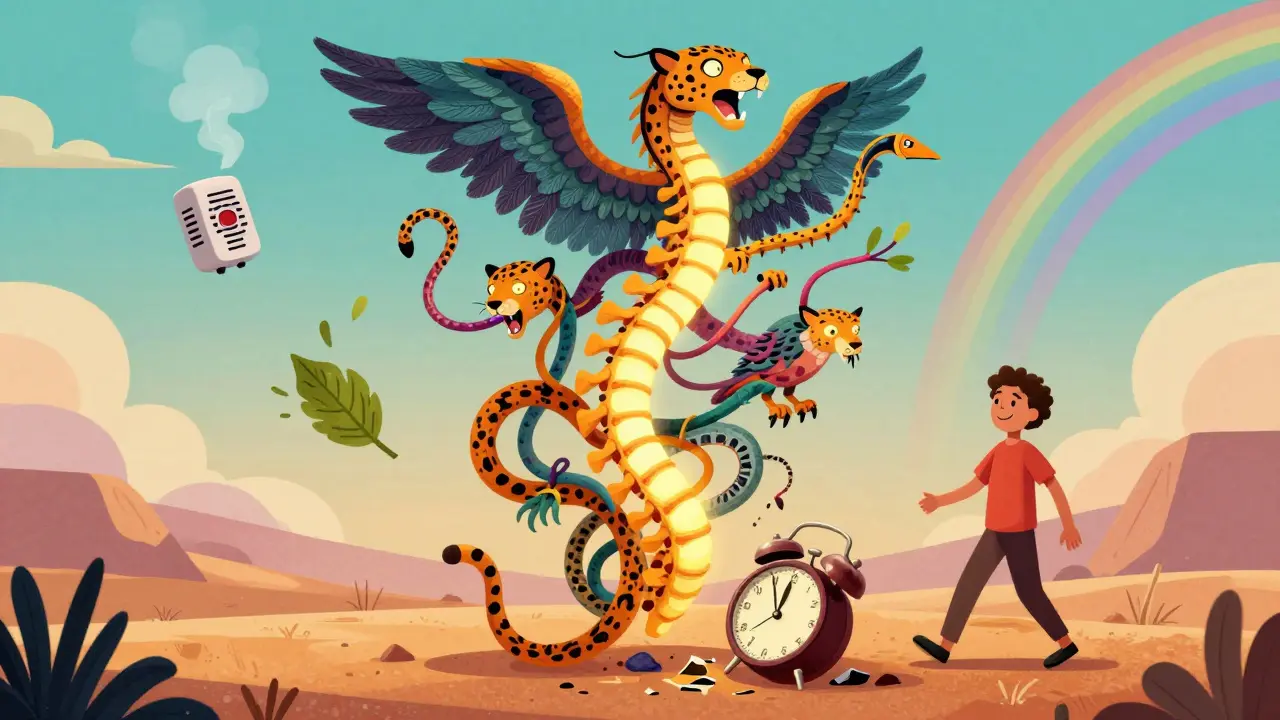
For years, people with chronic pain were told: "Your back is damaged. Move carefully. Avoid anything that hurts." But what if that advice was wrong? What if the pain you feel isn’t a direct signal from a broken body, but a warning system that’s become too sensitive? That’s the core idea behind pain neuroscience education - and it’s changing how thousands of people live with pain every day.
Why Pain Isn’t Just a Damage Signal
Most of us think pain works like a simple alarm. If you twist your ankle, nerves scream to your brain: "Damage!" Your brain says: "Ouch!" You stop moving. Simple. But for people with long-term pain - back pain, fibromyalgia, chronic neck pain - that alarm doesn’t turn off. Even when the injury healed months or years ago, the pain keeps going. Why? The answer isn’t in the tissues. It’s in the nervous system. Pain is not a measurement of damage. It’s a protective output from your brain. Your brain takes in signals from your body, your emotions, your stress levels, your past experiences, and your beliefs - and then decides how much danger you’re in. If your brain thinks you’re in danger, it produces pain. Even if there’s no tissue damage left. This isn’t theory. It’s science. Brain scans show that when someone with chronic pain learns how their nervous system works, activity in the pain-processing areas of the brain actually drops. One study found a 22% reduction in insular cortex activation after just a few sessions of pain neuroscience education. That’s not placebo. That’s your brain rewiring itself.How Pain Neuroscience Education Works
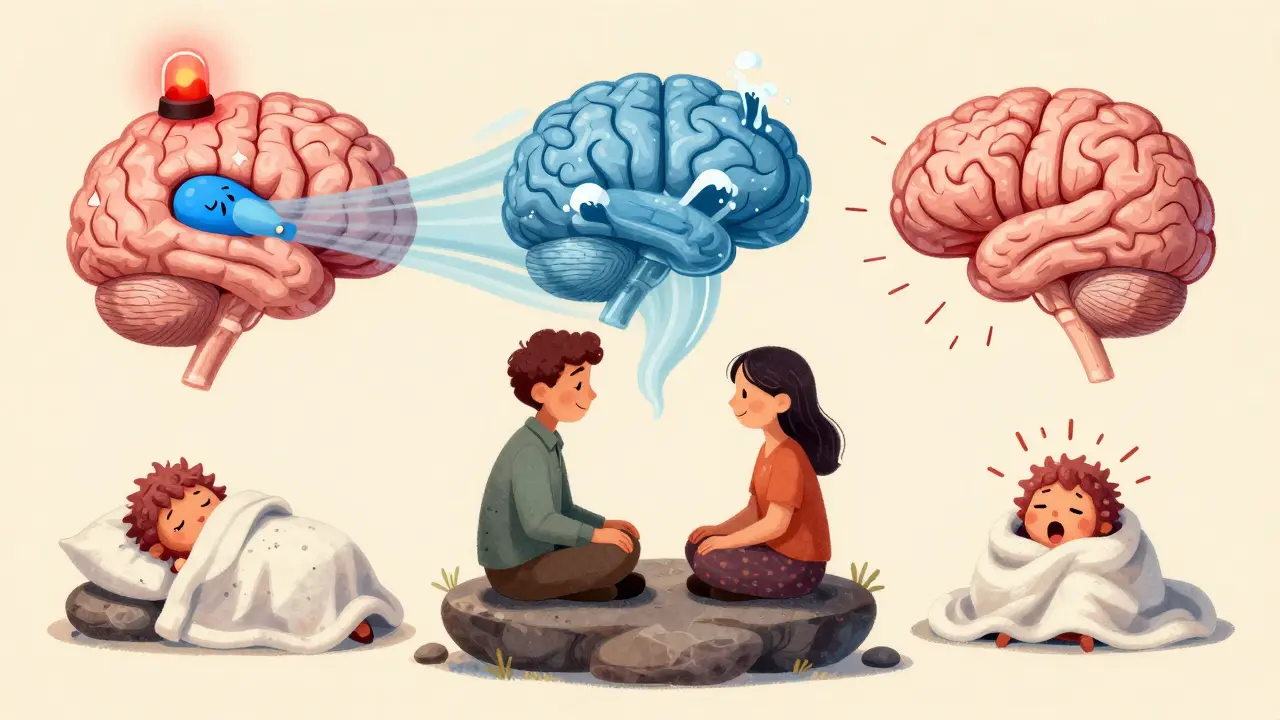
Pain neuroscience education, or PNE, is a structured way to teach people how their pain system really works. It replaces old ideas - like "your spine is degenerating" or "your muscles are tight" - with a modern understanding of pain as a complex output of the brain and nervous system. Instead of saying "your disc is bulging," a practitioner using PNE might say: "Your nervous system is like a smoke alarm that’s been set too sensitive. It goes off even when there’s just a bit of steam - not a fire. That’s what’s happening with your pain. It’s not telling you that you’re hurting your body. It’s telling you that your brain thinks you might be in danger. And right now, it’s being overly cautious." This shift in language matters. When people believe their pain means they’re being damaged, they avoid movement. They stop walking, lifting, bending, even laughing. That avoidance makes muscles weaker, joints stiffer, and the nervous system even more sensitive. It’s a vicious cycle. PNE breaks that cycle. It gives people permission to move again - not because the pain is gone, but because they now understand it’s not a threat. They learn about:- Peripheral and central sensitization - how nerves become more reactive over time
- Neuroplasticity - how your brain and nerves can change, for better or worse
- The biopsychosocial model - how stress, sleep, emotions, and beliefs all influence pain
- The difference between pain and harm
What the Research Shows
Over 20 systematic reviews and meta-analyses confirm PNE works. In a 2023 analysis of 23 randomized trials, people who received PNE saw:- A 1.8-point drop in pain intensity on a 0-10 scale
- A 12.3% reduction in disability (measured by the Oswestry Disability Index)
- A 6.2-point drop in pain catastrophizing - the tendency to magnify pain and feel helpless
Who Benefits the Most?
PNE is most effective for people with chronic pain - pain that lasts longer than three months. That’s because chronic pain is rarely about tissue damage. It’s about nervous system sensitivity. People with long-term low back pain, fibromyalgia, chronic neck pain, and even some types of headaches respond well. One 42-year-old nurse with fibromyalgia reduced her daily pain medication from six pills to one every three days after completing a six-session PNE program paired with graded activity. But it doesn’t work for everyone. It’s less helpful for:- People with acute injuries - like a recent sprain or surgery - where tissue damage is still the main issue
- Those with severe cognitive impairment or low health literacy - complex neuroscience concepts can be hard to grasp without adaptation
- People who expect immediate pain elimination - PNE doesn’t promise quick relief. It promises understanding, and that takes time
How It’s Delivered
PNE isn’t a lecture. It’s a conversation. The best sessions are one-on-one, lasting 30-45 minutes. They use stories, metaphors, and visuals - not medical jargon. The "Explain Pain" method by David Butler and Lorimer Moseley is one of the most widely used. It compares the nervous system to a car alarm that’s been set off too many times. Another approach, by Adriaan Louw, adds cognitive-behavioral techniques to help people challenge fear-based thoughts. Clinicians - usually physical therapists, but sometimes occupational therapists or pain specialists - use simple tools: drawings of nerves, analogies like "the alarm system," and written handouts. Digital apps like the "Pain Revolution" app (with over 186,000 downloads) now help people review concepts at home. The goal isn’t to make patients neuroscientists. It’s to give them a new lens. To help them say: "This pain isn’t a sign I’m breaking. It’s a sign my system is scared. And I can help it calm down."Real Stories, Real Change
On Reddit’s r/ChronicPain community, a user named "PainWarrior87" wrote: "After six months of fearing movement would damage my back, the metaphor of a sensitive smoke alarm helped me understand my pain wasn’t signaling danger. I’ve since returned to hiking and reduced opioid use by 75%." That’s not an outlier. Thousands of similar stories exist. People who stopped avoiding stairs. Who started gardening again. Who went back to work. Who stopped taking opioids because they no longer believed their pain meant catastrophe. But there’s also frustration. About 17% of patient reviews on Healthgrades complain PNE was "too much science" or didn’t help their acute pain. That’s a sign of poor delivery - not a flaw in the approach. When PNE is explained poorly, it feels abstract. When it’s tied to movement and personal experience, it sticks.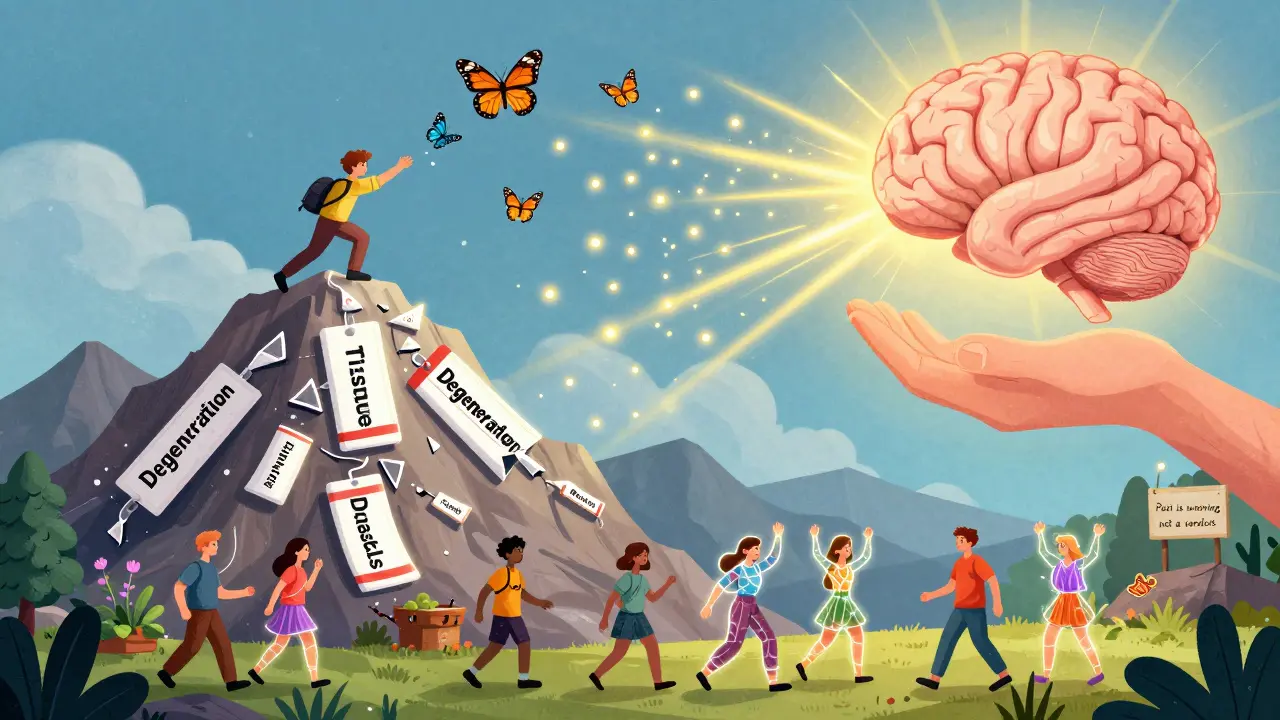
What Clinicians Need to Know
Delivering PNE isn’t easy. It requires shifting from a biomedical mindset - "fix the structure" - to a biopsychosocial one - "understand the system." Many clinicians struggle with this. A 2023 survey found only 28% of physical therapists felt confident delivering evidence-based PNE. The learning curve takes 3-6 months. Clinicians need to:- Learn basic neuroanatomy and pain physiology
- Practice using metaphors that fit the patient’s life
- Listen more than they talk
- Link education directly to movement - "Now that you know your pain isn’t damage, let’s try this gentle stretch"
What’s Next for Pain Neuroscience Education
PNE is no longer experimental. It’s in mainstream practice. 68% of U.S. physical therapy clinics specializing in pain now use it. 72% of U.S. physical therapy programs teach it - up from just 12% in 2010. New research is exploring PNE for acute pain, like after surgery. A major NIH-funded trial is testing whether teaching patients about pain biology before and after surgery can reduce long-term pain and opioid use. Virtual reality is being tested to make learning more immersive. Early results show 30% better knowledge retention than traditional methods. And insurance is catching up. Since 2021, Medicare in the U.S. has reimbursed PNE under physical therapy evaluation codes. Forty-one Fortune 100 companies now use PNE principles in workplace injury programs - and report 22% shorter workers’ compensation claims.What You Can Do
If you live with chronic pain and feel stuck, ask your therapist: "Have you heard of pain neuroscience education? Can we talk about how my nervous system might be involved?" Don’t expect instant relief. Expect understanding. That’s the first step to breaking free from fear. And once you understand your pain isn’t a signal of damage, you can start moving - not despite the pain, but with it. If you’re a clinician, start small. Learn one metaphor. Use one handout. Ask your patient: "What do you think your pain means?" Then listen. That’s where change begins.Is pain neuroscience education just for back pain?
No. While it’s most commonly used for chronic low back pain, PNE works for any persistent pain condition where the nervous system has become overly sensitive - including fibromyalgia, chronic neck pain, headaches, complex regional pain syndrome, and even some types of joint pain. The principles apply whenever pain continues long after tissues have healed.
Does PNE mean my pain isn’t real?
Absolutely not. Your pain is real. PNE doesn’t deny your experience - it explains it. Pain is a real output from your brain, just like fear or hunger. Just because it’s generated by your nervous system doesn’t mean it’s imaginary. It means your brain is responding to what it thinks is a threat - even if that threat isn’t physical damage.
How long does it take to see results from PNE?
Changes in pain perception often start within 2-4 sessions. Many people report feeling less fear of movement and reduced catastrophizing after just one or two meetings. But meaningful improvements in function - like walking farther or returning to work - usually take 4-12 weeks, especially when combined with movement. The goal isn’t to eliminate pain overnight, but to change your relationship with it.
Can I do PNE on my own with books or apps?
Yes, but it’s less effective without guidance. Apps like "Pain Revolution" and books like "Explain Pain" are excellent resources. But the most powerful results come when you discuss your personal pain experience with a trained clinician. They can tailor the message, answer your questions, and link the science to your daily movements - which is critical for lasting change.
Why isn’t PNE used more widely if it works so well?
Three main reasons: First, many clinicians were trained in the old biomedical model and haven’t had time or resources to retrain. Second, PNE sessions take longer than typical 15-minute appointments. Third, patients often expect a quick fix - a massage, a shot, a pill - not a lesson in neuroscience. But as more people experience its benefits and insurance begins to cover it, adoption is growing fast.


