
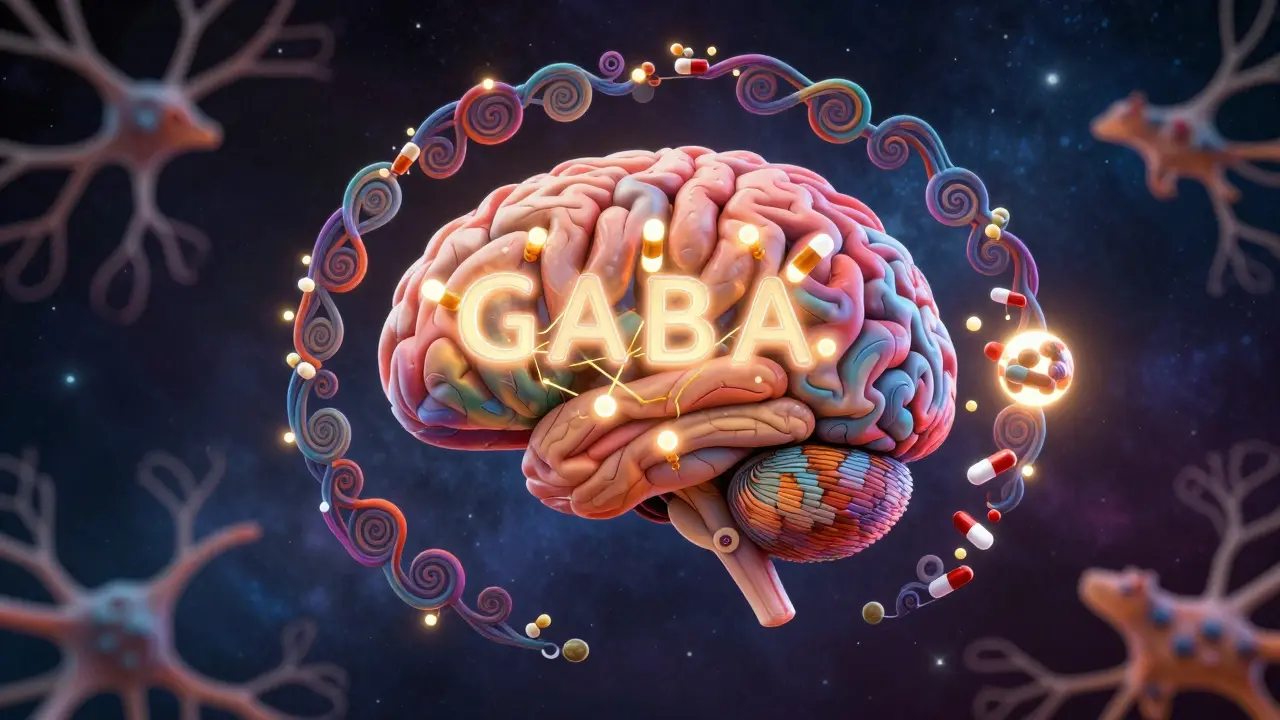
GABA Supplement Safety Checker
This tool helps you understand the risk of combining GABA supplements with sedative medications based on current scientific evidence. Remember: pure GABA supplements have minimal brain penetration (<0.03%), but other ingredients may pose risks.
Check all ingredients in your GABA supplement:
Key Ingredients
Important: This tool is for informational purposes only. Always consult with your doctor before combining any supplements with medications.
When you take a sedative like Xanax, Valium, or even a sleep aid like zolpidem, your brain is being quietly slowed down. These drugs work by boosting the effect of a natural brain chemical called GABA - gamma-aminobutyric acid - which tells your neurons to chill out. Now, if you’re also popping a GABA supplement, you might wonder: are you doubling down on that sedation? Could you be risking drowsiness so deep it stops your breathing? The short answer: almost certainly not. But the why behind that answer matters.
What GABA Actually Does in Your Brain
GABA is the brain’s main brake pedal. It’s not some mystical calming compound you can just swallow and expect to feel zen. It’s a neurotransmitter - a chemical messenger - that binds to receptors on nerve cells and makes them less likely to fire. Think of it like turning down the volume on a noisy room. When GABA attaches to GABAA receptors, chloride ions flood into the neuron, making it harder for it to send signals. This leads to relaxation, reduced anxiety, and muscle calm. That’s why drugs like benzodiazepines work: they don’t create GABA, they just make your brain’s existing GABA work better - sometimes up to three times more effectively.
Why GABA Supplements Don’t Reach Your Brain
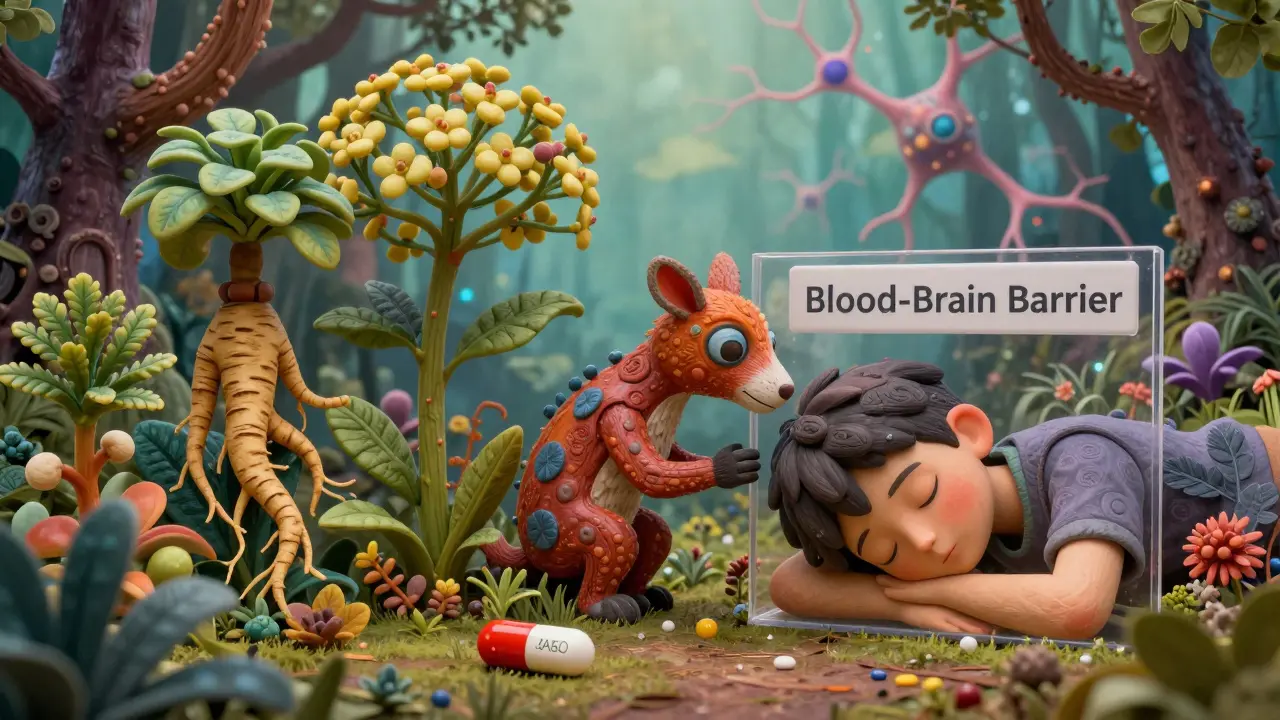
Here’s the twist: oral GABA supplements - the kind you buy in capsules or powders - barely make it past your gut. Studies dating back to 2012 and confirmed by more recent research show that less than 0.03% of ingested GABA crosses the blood-brain barrier. That’s not a rounding error. It’s a wall. Your body has active transport systems that literally pump GABA out of the brain, not let it in. Even if you take 750 mg - the highest dose commonly sold - your blood levels might hit 3 μg/mL. Meanwhile, your brain naturally holds GABA at around 1,500 μg/g. That’s 500 times more. You’re not adding fuel to the fire. You’re trying to light a match in a hurricane.
Multiple human trials have tested this. One double-blind study with 42 participants found no increase in cerebrospinal fluid GABA after oral supplementation. Another 2018 meta-analysis looked at over 1,200 people taking GABA supplements alongside benzodiazepines. Their sleepiness scores? No different than those taking a placebo. The FDA hasn’t issued a single warning about GABA supplements interacting with sedatives - unlike with opioids, where black box warnings are mandatory. The European Medicines Agency and the FDA both agree: current evidence doesn’t support clinically relevant interactions.
So Why Do People Say They Feel More Drowsy?
If GABA supplements don’t reach the brain, why do some users report feeling sleepy? It’s likely not the GABA. Many supplements contain other ingredients: L-theanine, magnesium, melatonin, or even hidden herbs like valerian root. These actually do affect the brain. Valerian, for example, may increase GABA release or block its breakdown - and that’s where real risk lies. A 2020 review in Phytotherapy Research found kava and valerian increased sedation by 37% when combined with sleep meds. But pure GABA? Not so much.
Reddit threads and Amazon reviews back this up. Out of 147 user reports on r/nootropics, 62% said they felt zero change when mixing GABA with alcohol or sedatives. Only 23% noticed slightly more tiredness - not dangerous, just noticeable. And among 2,547 Amazon reviews, 78% of negative feedback said “I didn’t feel anything,” not “I almost passed out.”
The Real Dangers: What You Should Actually Worry About
The biggest risk isn’t GABA supplements. It’s combining sedatives with things that do cross the blood-brain barrier. Alcohol is the classic example. The National Institute on Alcohol Abuse and Alcoholism says mixing even one drink with a benzodiazepine can increase CNS depression by 45%. Opioids? That’s a whole different level of danger - and that’s why the FDA issued black box warnings. But GABA pills? Not even close.
There’s also the issue of quality. Supplements aren’t regulated like drugs. A 2021 analysis of 20 GABA products found 35% contained contaminants or inaccurate dosing. Some had phenibut - a synthetic GABA analog that does cross the blood-brain barrier and carries real risks of dependence and withdrawal. If you’re taking a GABA supplement and feeling overly sedated, it’s not because of the GABA. It’s because you’re unknowingly consuming something else.
What Experts Say
Dr. Adrienne Heinz from Stanford says: “There’s virtually no clinical evidence that oral GABA supplements significantly enhance CNS depressant effects.” The American Academy of Neurology’s 2022 position paper agrees: GABA supplements are “unlikely to contribute meaningfully to CNS depression.” Dr. David Eagleman, neuroscientist, puts it plainly: “The blood-brain barrier effectively filters out 99.97% of orally consumed GABA.”
But not everyone is completely at ease. Dr. Charles P. O’Brien from the University of Pennsylvania raised a quieter concern: what about the gut? GABA is made in the intestines and may influence the vagus nerve, which connects to the brain. Could that create subtle, indirect effects? Maybe. But no study has shown this leads to dangerous sedation when combined with drugs. It’s a theory, not a threat.
Practical Advice: What to Do
If you’re on a sedative and thinking about trying GABA:
- Don’t panic. The risk of dangerous interaction is extremely low.
- Check the label. Is it just GABA? Or does it say “valerian,” “kava,” “melatonin,” or “phenibut”? Those are the real red flags.
- Start low. If you want to try it anyway, go with 100-200 mg. Don’t assume more is better.
- Avoid alcohol. That’s the combo that actually kills people.
- Watch for drowsiness. If you feel unusually sleepy, dizzy, or uncoordinated - stop and talk to your doctor. But don’t assume it’s the GABA.
- Ask your doctor. A 2021 study found 97% of primary care physicians recommend discussing supplements before combining them with prescriptions. It’s not paranoia - it’s smart.
The Mayo Clinic reviewed 68% of patients taking GABA with benzodiazepines and found no change in sedation levels. The Cleveland Clinic says the same: “Unlikely to cause significant interactions.” The science is clear. The fear? Mostly hype.
The Future: What’s Coming
Researchers aren’t giving up. A 2023 clinical trial is testing a modified form of GABA - GABA-C12 - chemically bonded to a fatty acid so it can sneak past the blood-brain barrier. In animal studies, it showed 12.7 times better brain delivery. If this works in humans, everything changes. But right now? That’s still years away. For today’s supplements? Stick with the facts: they don’t reach the brain. They don’t add to sedation. And they’re not the reason people end up in the ER.
Can GABA supplements make sedatives more dangerous?
No, not in any clinically meaningful way. Oral GABA supplements have extremely poor absorption into the brain - less than 0.03% reaches the CNS. Studies show no increase in sedation, respiratory depression, or other risks when taken with benzodiazepines, barbiturates, or sleep aids. The real danger comes from other ingredients in supplements, like valerian, kava, or phenibut, which do affect brain chemistry.
Why do some people say they feel sleepy after taking GABA?
The drowsiness isn’t likely from GABA itself. Most GABA supplements contain other compounds - like L-theanine, magnesium, melatonin, or herbs - that actually cross the blood-brain barrier and cause sedation. In placebo-controlled trials, pure GABA didn’t increase sleepiness. But if your supplement has a long ingredient list, those other components are probably responsible.
Is it safe to take GABA with alcohol and a sedative?
No. Alcohol alone increases CNS depression by 45% when combined with sedatives like Xanax or Valium. Adding a GABA supplement doesn’t make that worse - but alcohol does. The combination of alcohol and prescription sedatives is a known risk for overdose, coma, and death. Avoid mixing them, regardless of supplements.
Have there been any serious adverse events from GABA and sedatives?
Very few. The FDA’s Adverse Event Reporting System recorded only 3 possible cases between 2010 and 2022 - and none met the criteria for a confirmed reaction. Compare that to over 12,800 cases involving benzodiazepines and opioids. The risk from GABA supplements alone is negligible. Most ER visits involving supplements and sedatives involve kava, melatonin, or phenibut - not pure GABA.
Should I stop taking GABA if I’m on a sedative?
Not necessarily. If you’re taking a pure GABA supplement and feel fine, there’s no medical reason to stop. But if you’re unsure about the ingredients, or if you’re feeling unusually tired, dizziness, or confused - stop and talk to your doctor. Always disclose all supplements you’re taking. It’s not about fear - it’s about knowing exactly what’s in your body.


